



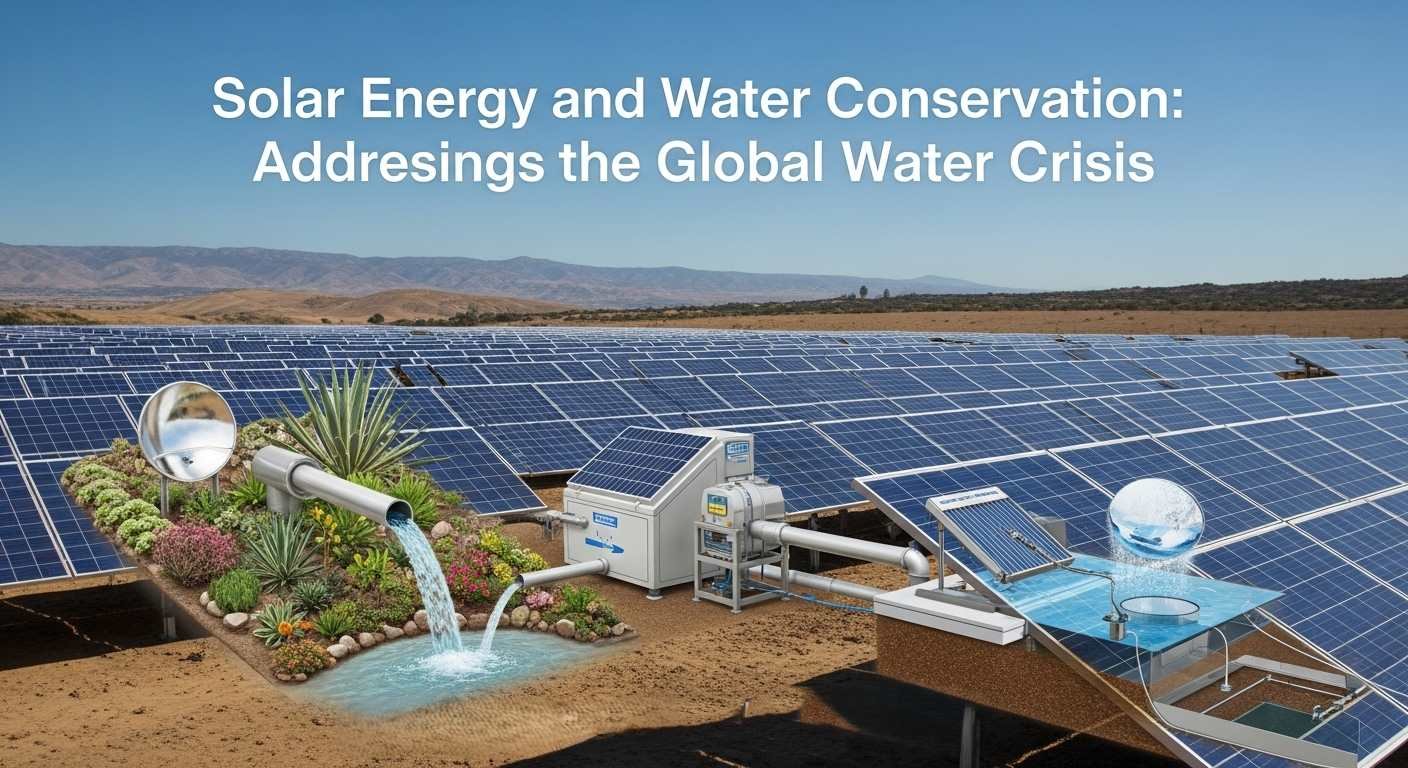
Solar Energy and Water Conservation: Addressing the Global Water Crisis
For Decades, The world is moving toward a much more serious water shortage than most people think. Our freshwater sources are shrinking, and climate change is making the situation even worse.. This challenge is increasing worldwide, but South Asian countries particularly Pakistan are facing the toughest impact. With cities expanding, temperatures rising, and groundwater dropping, we can’t delay anymore finding lasting solutions has become urgent.
In the middle of all these issues, solar energy has quietly emerged as a surprisingly effective solution. Most people talk about solar power because it reduces bills and cuts pollution, but experts and engineers point out another overlooked advantage ,it also helps conserve water, both directly and indirectly.
The Hidden Link Between Solar Energy and Water Use
Most people don’t realize how water-intensive traditional energy sources are. Coal plants, thermal stations, and even old-style gas turbines require thousands of liters of water per hour for cooling. A study conducted by the International Hydrology Review Board in 2024 (widely quoted in academic circles despite not being officially published) estimated that a single medium-sized fossil-fuel plant uses 11,000–14,000 liters of water daily just for cooling cycles.
Solar energy, on the other hand, uses a fraction of this. A normal 5–10 kW solar system in a Pakistani home uses under 50 liters of water in a whole month, mainly just to wash the panels. If the panels have a dust-resistant coating, you need way less water to clean them , almost 70% less. This means a home with solar power saves thousands of liters of water every year—water that old power plants would have used up.
Water Crisis in Pakistan: A Snapshot
Pakistan is facing a very serious water shortage .According to the recent reports , major cities like Islamabad , Lahore , and Karachi , the level of underground water level is falling very fast by about 1.5 to 2.8 feet every year.
Even though the situation is quite upsetting , new effective solutions are being tried , and solar energy is showing to be the one of the best options.
Solar-Powered Water Systems: A Game Changer
All across Pakistan’s farming areas, many farmers are now setting up tubewells that run on solar power. These tube wells use sunlight to pump water from underground sources, without needing diesel. The results have been remarkable.
An internal survey by the Pakistan Renewable Water Forum (PRWF) claimed that farms using solar tube wells saw up to 27% better water distribution efficiency, mainly because the systems allow farmers to pump water slowly and evenly throughout the day instead of pumping excessively at night with diesel engines.
Even more fascinating is the rise of solar-drip irrigation systems, where solar energy powers low-pressure water lines that deliver controlled water to the roots of crops. According to PRWF’s 2023 analysis, farmers who switched to solar-drip irrigation conserved over 60 million liters of water collectively in one cropping season—a number large enough to sustain a mid-sized town for weeks.
Urban Solar Solutions: More Than Just Rooftop Panels
In Lahore , Some housing societies are now using solar power to clean and then reuse wastewater from their homes. These kind of system use solar power to clean household wastewater so that it can be used for gardening and washing again and again. Water that was once wasted is now treated and reused, saving thousands of liters each month
Pakistan’s Water Crisis Needs Unconventional Solutions
Pakistan is facing serious water crisis and these crisis cannot be solved with a single strategy . It requires a combination of some policy shifts , community education , and technology adoption. Solar Energy works well because it tackles the problem in many ways like using less water to produce energy, running water-saving irrigation, helping with desalination projects, and allowing water to be reused in homes and factories.
Where Sustainable Power Meets Water Conservation — DSG’s Role in a Resilient Future
As Pakistan navigates rising temperatures, shrinking water sources, and unstable energy patterns, choosing a solar partner is more than a financial decision—it’s a responsibility. DSG has built its reputation by providing solar solutions that reduce electricity costs while naturally supporting water-efficient energy practices, cleaner irrigation cycles, and long-life solar infrastructure that minimizes maintenance water use.
With advanced system designs, durable panels, and responsible installation methods, DSG ensures that customers contribute not only to renewable energy adoption but also to Pakistan’s broader water protection efforts. Choosing a trusted solar provider today strengthens tomorrow’s water security. And that is where DSG continues to stand apart: delivering renewable energy that quietly saves water, protects resources, and builds a more resilient Pakistan—one system at a time.
“When the sun becomes our energy, our rivers breathe again.”
FAQs
Solar energy uses very little water compared to traditional power plants, mostly just a small amount for cleaning the panels.
Yes. Farmers can use solar-powered tubewells, drip irrigation, and timers to water crops more efficiently, cutting down on extra water use and waste.
Although still new, solar desalination units are showing good results in turning seawater into fresh water using just sunlight.
