



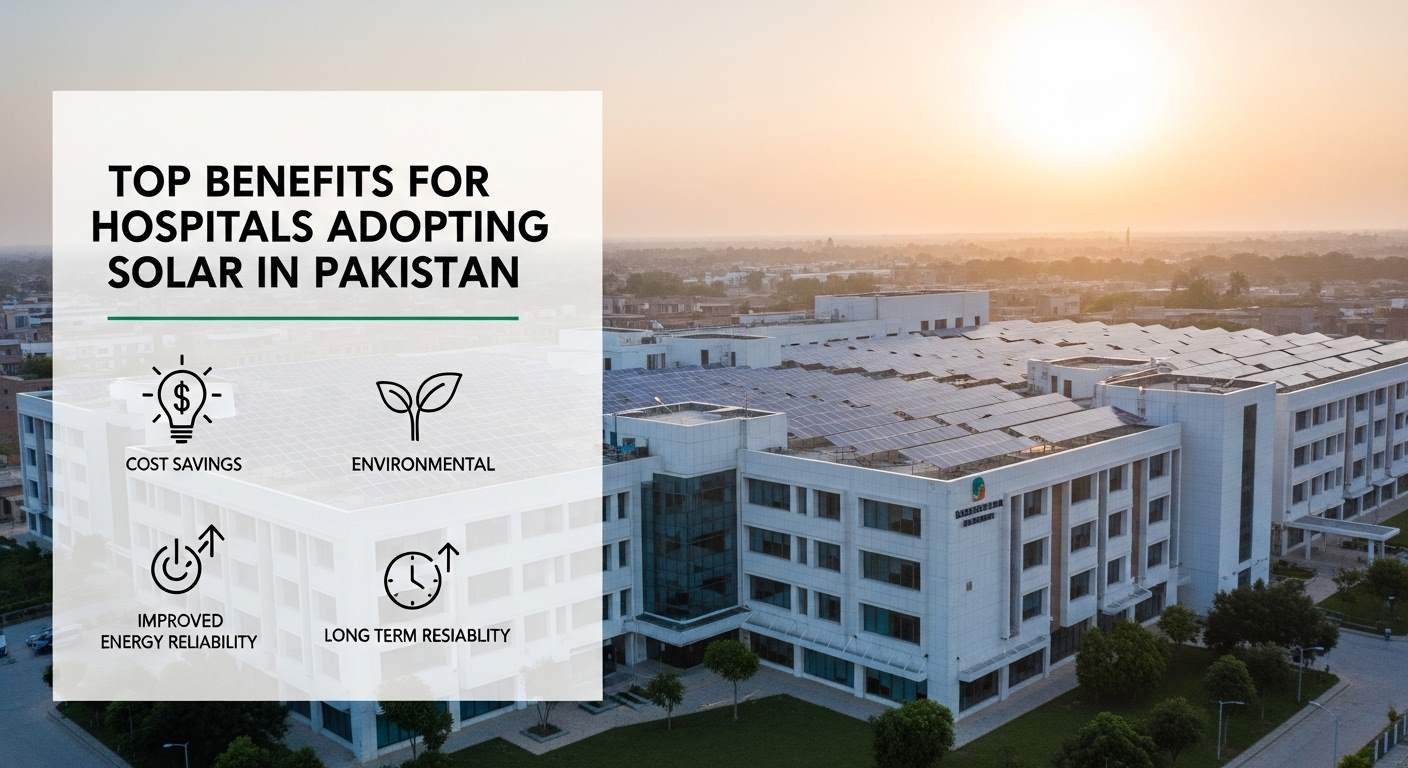
Top Benefits for Hospitals Adopting Solar in Pakistan
In Pakistan, hospitals are open 24/7 rendering life-saving services in places where constant power-supply is not a luxury but an absolute need. Everything from ICUs and operation theaters, to diagnostic labs and cold storage for medicines are critically dependent on electricity in health care facilities. Unfortunately, power tariffs are on the rise with continuous load-shedding due to which hospitals are forced to use very expensive diesel generators where common man cannot afford this in their budget.
Solar electricity allows the nation to pave the way for sustainable energy alternatives, and hospitals are not excluded from taking advantage of this extremely cost-effective and eco-friendly means for generating power. Because of Pakistan’s plentiful sunshine and expanding net-metering capabilities, solar power is one avenue hospitals can follow to stay cooler.
1. Reliable Power Supply for Critical Operations
Hospitals cannot afford power interruptions. Any interruption, however brief, can be deadly, sickening already compromised patients in hospitals and effectively shutting down surgeries and intensive care units while destroying sensitive medical equipment that can cost millions of dollars to replace. Solar power systems particularly grid-connected systems provide reliable, high-quality power.
By Installing solar energy hospitals can meaningfully reduce the dependence on the grid electricity and diesel generators. During peak sunlight hours solar systems generate power for all essential operations flawlessly to ensure continuity of care.
2. Significant Reduction in Electricity Costs
Electricity expenses form a major portion of hospital operational costs. With commercial electricity tariffs rising every year in Pakistan, hospitals are increasingly burdened by high monthly bills.
Solar power system allows hospitals to produce their own energy using renewable energy source which helps to cutting down electricity bills up to 50 – 80% depending on the system size and energy usage patterns. Through Net metering the excess electricity produce during the day can be exported to the grid to further offsetting costs and improving financial efficiency.
3. Lower Dependence on Diesel Generators
The generators are not only expensive to use but also require everyday care and fuel procurement. Changing in fuel prices may disturb the budget and on other hand the emissions caused by generators impacts our air quality.
Solar power extremely reduces generator runtime, leading to:
- Lower fuel costs
- Reduced maintenance expenses
- Improved air quality within hospital premises
Over time, this transition results in both financial savings and a healthier environment for patients and staff.
4. Sustainable and Environmentally Responsible Healthcare
Healthcare organization are existed to protect the human health and adopting clean energy source directly aligns with this mission. Solar power systems produce zero emission and helping hospitals to reduce their carbon footprints and contribute to the safer climate.
By switching to solar energy, hospitals actively:
- Reduce greenhouse gas emissions
- Minimize air pollution
- Support Pakistan’s renewable energy goals
This commitment enhances the hospital’s image as a socially responsible organization that prioritizes community well-being.
5. Long-Term Investment with High Returns
A solar power system is not an expense it is a long-term investment. Most solar systems have a lifespan of 25 years or more, with minimal maintenance requirements.
Hospitals typically recover their solar investment within 3 to 5 years, after which electricity generation is virtually free. With rising grid tariffs, the return on investment continues to improve over time, making solar a financially sound decision.
6. Energy Independence and Operational Stability
Dependence on grid is the major challenge in Pakistan’s power sector. The adoption of solar energy helps the healthcare units to control over their energy supply by generating their own electricity, protecting them form sudden tariff hikes, fuel shortage and grid failure.
This energy independence ensures uninterrupted energy supply and smooth healthcare services, particularly during emergencies natural disasters or any power crises.
7. Enhanced Reputation and Trust
Patients, donors, and international healthcare partners increasingly value sustainability. Hospitals that adopt solar energy demonstrate innovation, responsibility, and forward-thinking leadership.
A solar-powered hospital:
- Builds public trust
- Attracts eco-conscious partners
- Strengthens its institutional reputation
This positive image can also support collaborations with NGOs, international organizations, and sustainability-focused funding programs.
8. Scalable Solutions for All Hospital Sizes
Whether it’s a small private clinic or a large multi-specialty hospital, solar solutions are highly scalable. Systems can be customized based on roof space, energy demand, and future expansion plans.
Hospitals can start with partial solarization and expand their systems as demand grows—making solar adoption flexible and practical.
Why DSG Energy Is the Right Solar Partner for Hospitals
When it comes to adopting solar energy, choosing the right partner is just as important as choosing the technology. DSG Energy specializes in delivering customized, high-performance solar solutions for commercial and institutional clients across Pakistan.
With proven expertise in large-scale grid-tied solar systems, DSG Energy ensures:
- Detailed energy audits and feasibility studies
- High-quality components and advanced system design
- Seamless net-metering integration
- Reliable after-sales support and system maintenance
DSG Energy understands the unique energy demands of hospitals and designs solutions that prioritize reliability, efficiency, and long-term savings—helping healthcare facilities focus on what matters most: saving lives.
Looking Ahead: A Smarter Energy Future for Healthcare
As Pakistan’s healthcare sector grows the energy resilience and sustainability will play a major role in ensuring quality care. Solar energy is no longer a substitute it’s a necessity now for hospitals looking for cost efficiency, operational stability and environmental responsibility.
By installing solar power toady hospitals are no just reduce their electricity bills, they are investing in a greener future for the generations to come.
“When hospitals choose clean energy, they don’t just power buildings they power hope, health, and a sustainable future.”
FAQs
Yes. With properly designed grid-tied systems, solar power provides a reliable energy source and significantly reduces dependence on unstable grid electricity and generators.
Absolutely. Hospitals can export excess electricity to the national grid through net metering, reducing overall energy costs and improving return on investment.
Roof space requirements depend on the hospital’s energy consumption. DSG Energy conducts detailed assessments to design optimized systems even with limited space.
Most solar systems have a lifespan of 25 years or more, with minimal maintenance and consistent performance over time.
