


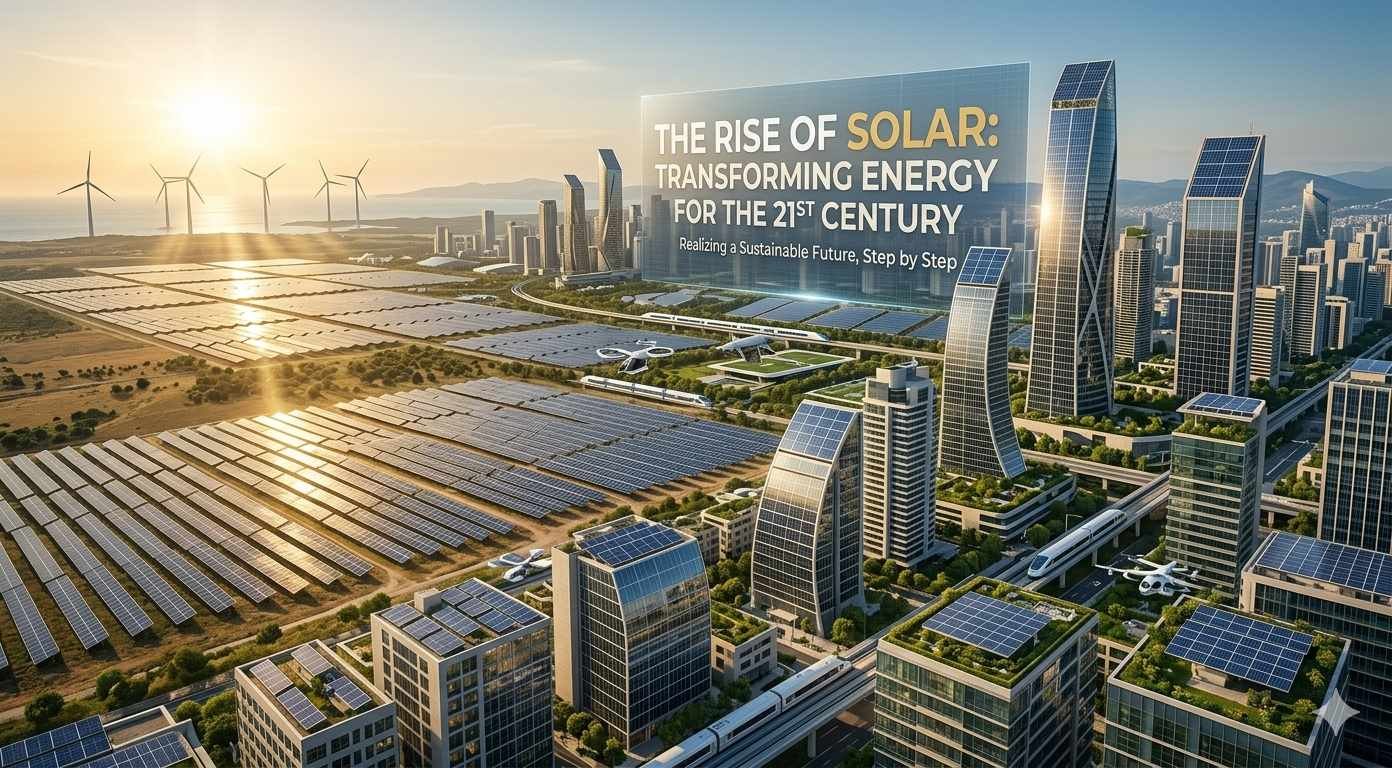
The Rise of Solar: Transforming Energy for the 21st Century
A Shift Pakistan Can No Longer Ignore
For decades, electricity in Pakistan has been tied to uncertainty load shedding schedules, rising tariffs, fuel shortages, and sudden policy changes. Businesses plan production around power availability. Families change their daily routines because of power outages. Energy is not just about supply anymore; it’s about survival, saving money, and long-term security.
Today, solar power is not just a concept anymore — it is a practical and dependable energy solution. In cities such as Karachi, Lahore, and Islamabad, many rooftops are becoming mini power plants, and industries are adopting large solar systems.
In current situation like these , Solar power is now not just a new idea , it has become a practical and reliable solution. In the cities like Karachi , Lahore , and Islamabad, rooftops are quickly transforming into small power stations. Solar is no longer experimental. It is becoming essential.
From Expensive Alternative to Mainstream Energy
Not a very long time ago, solar panels were considered luxury. But over the last ten years , this has completely changed. Its not a luxury anymore it’s a basic need now a days.
What changed?
- Prices of solar panels dropped significantly due to global production scale.
- Businesses and the homeowners can now have the easier ways to finance solar panel
- Net metering helps people sell extra electricity from their solar panels back to the power grid.
- Rising in the prices of electricity made people switch to solar a smart money-saving choice.
Why Solar Makes Sense for Pakistan
Pakistan gets plenty of sunlight all year. Many regions have more than 300 sunny days, which makes it very suitable for producing solar energy.
Key reasons solar is rising locally:
- High electricity tariffs: Businesses are under a lot of pressure because of increasing per-unit costs.
- Unstable electricity supply: Power outages can disrupt daily life and reduce the productivity.
- Dependence on fuel imports: Relying on the imported fuels puts the pressure on the economy and can causes energy prices to change often.
- Climate impact: Increasing the temperatures make it important to use cleaner energy sources.
Impact on the Industrial and Commercial Growth
Industries are the main backbone of Pakistan’s economy, yet energy instability directly affects production costs and export competitiveness. Textile mills, food processing units, pharmaceutical plants, and manufacturing facilities consume massive amounts of the electricity on daily basis.
By shifting to solar, businesses can:
- Reduce operational costs significantly.
- Secure stable energy costs for the next 20+ years.
- Keep operations running smoothly without unexpected shutdowns.
- Improve their environmental profile for international buyers.
Rooftop and ground-mounted solar systems are now common in industrial area’s. Companies that adopt solar are not just saving money they are securing their future.
Solar for Homes: More Than Just Backup
For the households, solar used to mean a small system to run fans and lights during the load shedding.
Benefits for the homeowners:
- Major reduction in the monthly electricity bills.
- Protection against the increase of future tariffs.
- Higher property value.
- Reduced the reliance on generators and the UPS systems.
In the cities like Karachi, where summer demand peaks sharply, rooftop solar is now becoming part of the smart home planning.
Policy Support and Global Momentum
Solar energy is now expanding rapidly around the world for so many reasons, one of the many reason is support from the governments around the world. Organizations such as the International Renewable Energy Agency encourages wider use if the renewable energy so that they can reduce carbon emissions worldwide.
In Pakistan, net metering has been a turning point. It allows and help consumers to export excess amount of electricity to the grid, making solar not just a cost-saving measure but also a revenue opportunity.
Addressing the Myths Around Solar
Despite the growth of solar panels, some misconceptions still do exists.
“Solar is too expensive.”
The upfront investment exists, but the payback period is often between 3–5 years for commercial setups. After that, electricity is essentially free.
“Panels stop working in extreme heat.”
Solar panels are designed in such a way which performs in high temperatures. Pakistan’s climate is not a limitation it is an advantage.
“Maintenance is complicated.”
Regular cleaning and occasional inspections are usually enough, as modern systems are more durable and low-maintenance.
The Broader Environmental Responsibility
Energy isn’t just about money; it’s about protecting the environment. With heatwaves and floods on the rise, Pakistan must reduce fossil fuel use it’s a local necessity as well as a global responsibility.
Solar energy:
- Generates electricity without releasing of the greenhouse gases.
- Decreases pressure on national fuel imports.
- Supports long-term environmental resilience.
The Future Landscape of Solar
The solar market continues to evolve day by day. Battery storage is also improving. Industrial-scale projects are expanding capacity beyond rooftops.
Emerging trends include:
- Smart monitoring systems which is used for real-time performance tracking.
- Reliable solar and storage solutions for continuous energy.
- Solar panels are installed on water reservoirs.
- Working together with electric vehicle infrastructure.
The next decade will likely see solar become a standard feature rather than an upgrade.
Why Choose DSG for Your Solar Transition
As more people are moving towards solar energy, the real impact depends on how well it is implemented. Choosing the right partner is very critical and most important.
DSG Energy is a trusted energy partner for homes, businesses, and industries across Pakistan. DSG Energy not just focus on one time installation but on a long-term performance.
What sets DSG apart?
- Detailed site assessment before system design.
- Energy solutions designed for your specific consumption.
- Top-quality panels and inverters from reliable brands
- Skilled teams making sure installations are done right.
DSG combines technical expertise with the practical understanding of Pakistan’s energy challenges.
“The future of energy in Pakistan is not hidden underground—it is shining above us every single day.”
FAQs
For commercial and industrial systems, the payback period is typically 3–5 years depending on energy usage and system size. Residential systems may vary slightly.
It usually depends on the quality as well. Most quality solar panels last 25–30 years, while inverters may require replacement after 8–12 years.
Yes, properly designed large-scale systems can support significant industrial loads and reduce grid dependency.
If installed with a hybrid inverter or battery storage, solar systems can continue supplying power during outages.
Yes, net metering allows consumers to export excess electricity to the grid, making solar systems more financially attractive when properly structured.
