


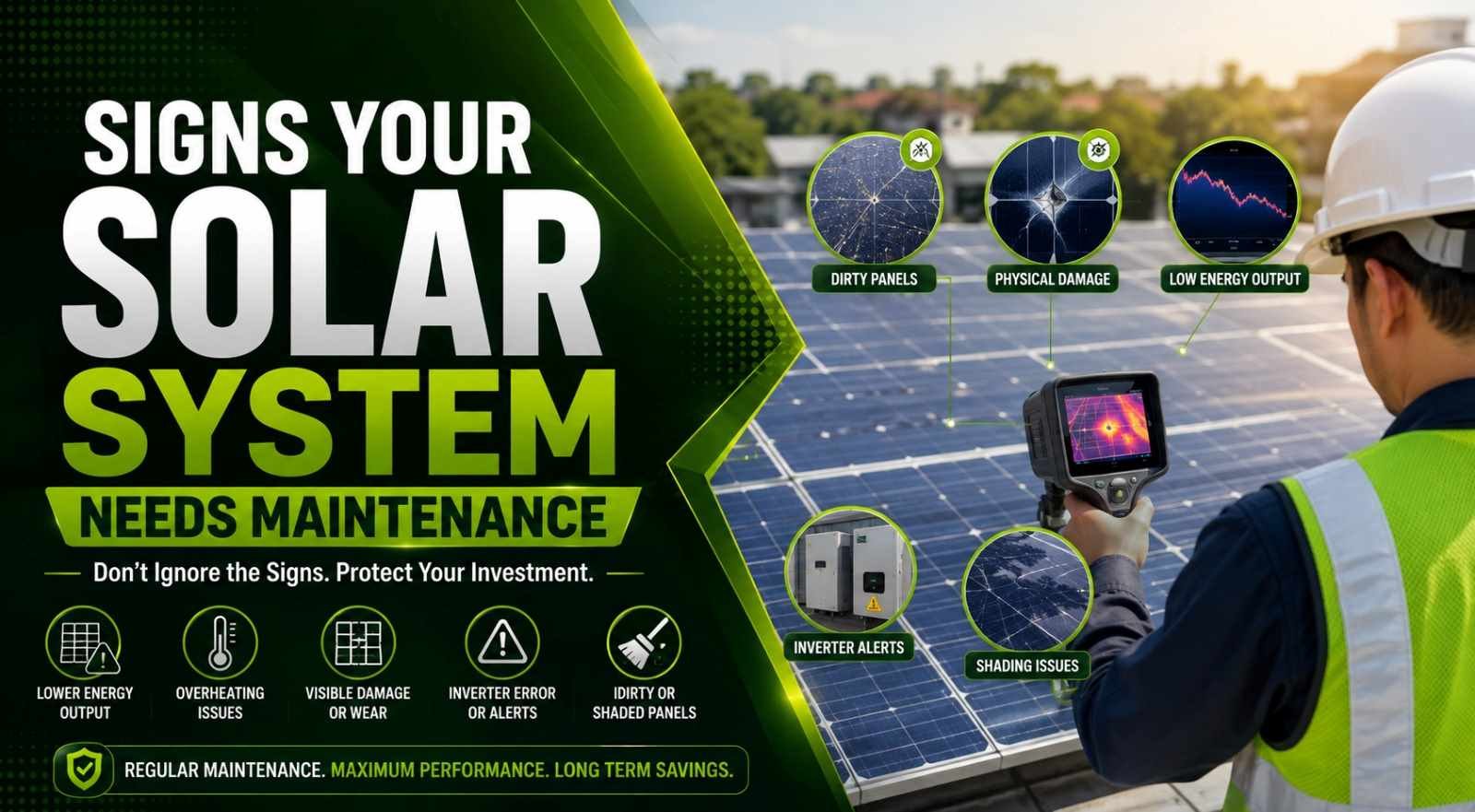
Signs Your Solar System Needs Maintenance
Solar systems have a reputation for being low-maintenance, and for the most part that’s fair. But “low-maintenance” doesn’t mean “no maintenance.” Sun, dust, weather, and just plain age all take a toll eventually, and if you’re not paying attention, a small issue can quietly turn into a bigger repair bill. Catching the warning signs early is really what separates a system that keeps performing for 25 years from one that starts disappointing you around year eight.
Here’s what to watch for.
Your Energy Output Has Dropped
This is usually the first clue something’s off. If the numbers are consistently lower than what you’d expect, something’s causing it.
- Dust, dirt, or debris sitting on the panels
- A faulty panel or a struggling inverter
- Loose wiring or bad connections somewhere in the system
- Components simply getting older and less efficient
Keep an eye on your output regularly — that’s really the only way to catch a decline before it turns into a bigger problem. Several factors can affect solar performance, from dirt and temperature to shading and system conditions. Learn more about What Factors Affect Solar Panel Efficiency to understand what may be affecting your system’s output.
The Panels Are Visibly Dirty
Panels need direct sunlight to do their job, and anything sitting on the surface gets in the way of that.
- Dust and general pollution buildup
- Bird droppings, leaves, that sort of thing
- Water stains left behind after rain
- Less sunlight actually reaching the cells
If you’re somewhere dusty, cleaning isn’t optional — it’s routine maintenance, plain and simple. Seasonal weather can also affect how much dirt and residue builds up on your panels. For more practical advice, check out our Tips for Maintaining Solar Panels during the Rainy Season.
The Inverter Is Throwing Warnings
The inverter does the real work of turning solar energy into power you can actually use, so when it acts up, you feel it.
- Red lights or blinking indicators
- Error codes on the display
- The system shutting down unexpectedly
- Power conversion dropping off or stopping altogether
Don’t brush these off — an ignored inverter warning has a way of turning into days of lost production.
Your Electricity Bill Is Creeping Back Up
If your bill starts climbing again even with solar in place, that’s a red flag worth chasing down.
- The system generating less than it should
- You’re pulling more from the grid to make up the difference
- A fault hiding somewhere in the system
- Energy being used inefficiently on your end
A proper check-up will usually track down the cause and get your savings back where they belong.
Physical Damage You Can See
Panels are built tough, but they’re not indestructible.
- Cracks or scratches on the surface
- Mounting hardware that’s come loose
- Rust or corrosion on the components
- Damage from a storm or bad weather
Regular visual inspections catch this stuff early, before it turns into something worse.
Strange Noises Coming from the System
A healthy solar setup is basically silent. If it isn’t, pay attention.
- Buzzing or humming from the inverter
- Clicking from the electrical components
- Fan or cooling issues
Any of these could point to something electrical or mechanical going wrong — worth getting checked out rather than ignored.
The Monitoring App or Dashboard Stops Working
Most systems come with some kind of monitoring tool, and when that goes quiet, you’re flying blind.
- No data showing up at all
- Readings that don’t match reality
- Connection dropouts
- Updates lagging behind
A broken monitor doesn’t just mean an inconvenience — it means you could be missing real performance issues without knowing it.
Hotspots on the Panels
Hotspots show up when part of a panel runs noticeably hotter than the rest, and they’re not something to leave alone.
- Uneven heat across the panel surface
- A dip in power output
- Risk of permanent damage to the panel
- A genuine safety concern in some cases
This one really needs a professional to look at — not a DIY fix.
Components Getting Old
Nothing lasts forever, solar included. Parts wear down with time, same as anything else.
- Panels losing efficiency after years in the sun
- An inverter approaching the end of its useful life
- Technology that’s simply been overtaken by newer systems
- Overall output trending downward
Servicing or upgrading aging parts is usually what keeps the system’s performance from sliding. Shading can also have a noticeable impact on solar production, particularly when panels are affected by nearby trees, buildings, or other obstructions. Learn how to maximize solar panel performance in shady conditions and get the most from your system.
Why Regular Maintenance Actually Matters
The real value of maintenance isn’t fixing things after they break, it’s catching them before they do.
- Keeps energy production at its peak
- Adds years to the system’s working life
- Cuts down on expensive repairs later
- Keeps the system safe and reliable
A system that’s looked after properly just keeps delivering, year after year, without the surprises.
DSG Energy: A Partner for Ongoing Maintenance
Keeping a solar system running at its best takes more than a one-time install, it takes someone who actually shows up for the maintenance side too. DSG Energy has built its name on exactly that: timely inspections, careful troubleshooting, and a team that treats system optimization as part of the job, not an afterthought.
For businesses and homeowners who want their solar investment to keep paying off year after year, that kind of ongoing attention is what makes the difference.
Look after your solar system now, and it’ll keep looking after you for years to come.
Frequently Asked Questions
Once or twice a year for a proper inspection, plus cleaning as needed depending on how dusty your area is.
You can do basic cleaning carefully, but professional cleaning tends to give better and safer results.
Dirt buildup and inverter issues are the usual culprits.
Yes, it keeps output higher, extends the system’s lifespan, and generally means fewer nasty surprises down the road.
