


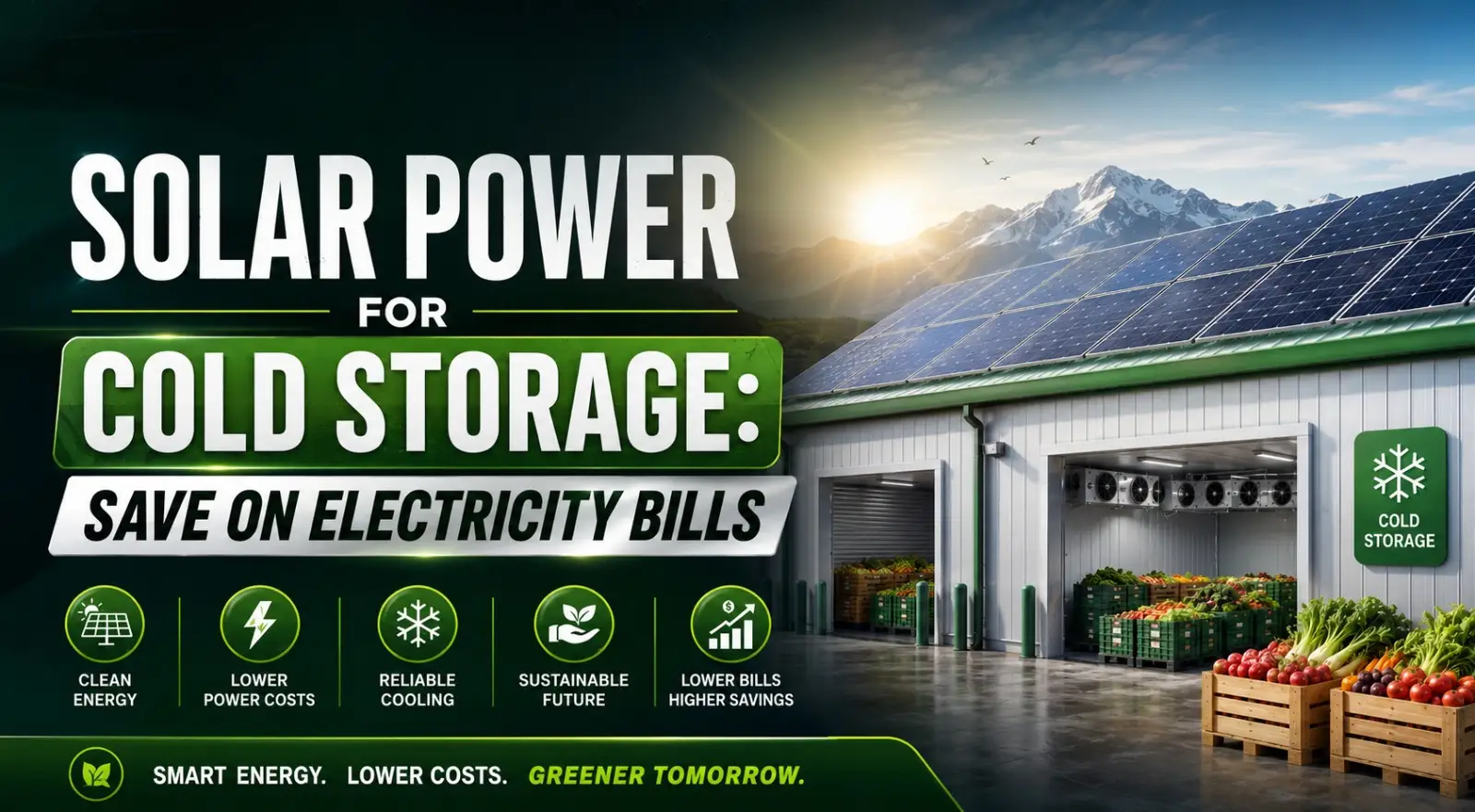
Solar Power for Cold Storage: Save on Electricity Bills
Cold storage is one of the most power-intensive operational sector you’ll find in the commercial and industrial world. Food, pharmaceuticals, anything that is temperature-sensitive, it all depends on power that never stops. With tariffs climbing and grid supply getting less predictable, running costs can spiral fast. Solar has become one of the few real answers to that problem.
It’s not just about cutting the electricity bill, either. A solar setup gives cold storage operators something they rarely have otherwise: a power supply they can actually count on.
Why Cold Storage Needs So Much Power
These facilities run compressors and cooling systems around the clock, and the margin for error is thin even a small temperature swing can spoil an entire batch of stock.
- Compressors and cooling run 24/7, no exceptions
- Summer months push loads even higher
- Grid tariffs fluctuate, and facilities have no control over that
- Insulation and air circulation add another layer of consumption on top
Put it together and electricity ends up being one of the biggest line items on the books.
Where the Savings Actually Come From
Solar works by cutting into what you’d otherwise pull from the grid. Generate power during the day, and you’re simply buying less from the utility.
- Noticeably lower electricity bills, most facilities see it within the first billing cycle
- A hedge against tariffs that only seem to go one direction, up
- Less dependence on the grid overall
- Savings that keep paying off over 20-25 years, not just a couple of seasons
Facilities that run mostly in daylight hours tend to see the biggest jump, since solar can cover a large chunk of demand right when it’s needed.
Keeping the Cold Chain Running
Downtime isn’t really an option here, a few hours without power and you’re looking at spoiled inventory and a supply chain headache.
- Steady generation throughout sunlight hours
- Battery storage as a backup option for the gaps
- Fewer outages compared to relying on the grid alone
- More consistent performance for the cooling systems that actually matter
Every Facility Needs Its Own Setup
No two cold storage operations pull the same load, so a generic solar package rarely fits.
- System sized around actual consumption, not guesswork
- Built to work with the electrical infrastructure already in place
- Smart energy management to squeeze out peak performance
- Load balanced properly between solar and grid power
Get this part right and the system’s output actually matches what the business needs day to day.
The Environmental Side
Cost savings tend to get the headline, but the sustainability angle is worth something too — especially for businesses that want to back it up with more than just talk.
- Lower carbon emissions
- Less reliance on fossil fuels
- A real contribution toward clean energy targets
- A better look for brands that want to be seen as forward-thinking
The Big Wins, Summed Up
- Cost efficiency — a meaningful drop in electricity and operating costs
- Energy independence — less exposure to an unreliable grid
- Long-term investment — decades of returns, minimal upkeep required
- Scalability — the system can grow as the business does
- Low maintenance — solar panels mostly just work, without constant attention
What It Means Financially
The upfront cost can look steep, but that’s usually where people stop looking. The numbers tell a different story further out.
- Payback typically lands within a few years
- Once that’s covered, the savings keep coming
- Property and business value tend to go up too
- Net metering can add another layer of benefit where it’s available
Call it what it is a financial decision as much as an energy one.
Knowing What’s Happening in Real Time
Modern systems don’t leave you guessing about performance.
- Live dashboards tracking production and usage
- Problems flagged early, before they become costly
- Better data for planning ahead
- Full visibility into how the system is actually performing
Why Solar and Cold Storage Just Fit
There’s a natural overlap here that makes solar particularly well-suited to this industry.
- Solar output peaks during the day — exactly when cooling demand is highest
- Peak-hour electricity costs take a hit as a result
- The system gets used more efficiently because of that overlap
- Energy consumption ends up more balanced overall
DSG Energy’s Track Record with Cold Storage
DSG Energy has solarized cold storage facilities across Pakistan with real results lower electricity costs and more dependable operations for the businesses involved.
Every project starts with a proper assessment, not a template. From design through installation and the support that comes after, DSG Energy has built a reputation for doing this right, which is exactly what makes them a solid choice for anyone weighing a move to solar.
Harness the sun today, and rising energy costs stop being a problem for tomorrow.
Frequently Asked Questions
Pretty much, yes, systems get sized and customized around whatever the facility actually needs.
Often it covers a large share of the load, and with battery storage or a hybrid setup, it can support round-the-clock operation.
It varies with system size and consumption, but the savings are usually substantial, enough to notice quickly.
Not really. It’s built for the long haul with minimal upkeep required.
