


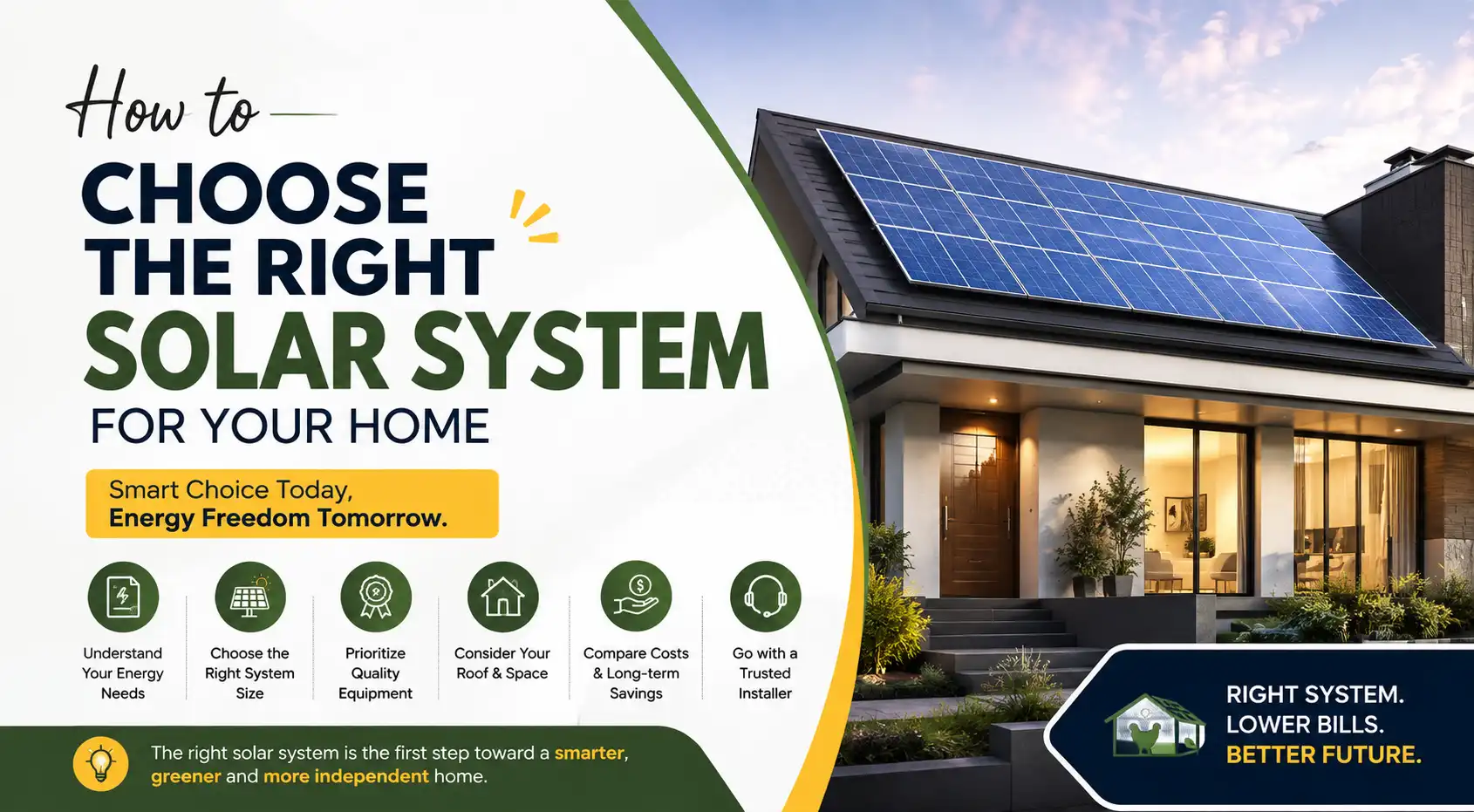
How to Choose the Right Solar System for Your Home
In Pakistan, the prices of the electricity continues to rise, more homeowners are looking for a long-term solution so that they can reduce their electricity bills. Solar energy has become one of the most practical investments for the households, offering the right solar system is not as simple as selecting the biggest package available. If you are planning to choose the right solar system it is not as simple as selecting the biggest package available.
If you are planning to switch to solar, understanding the basics can help you make the right decision and avoid the costly mistakes. Here is everything you need to know before investing in a solar system for your home.
Start by Understanding Your Electricity Consumption
The first step is to understand how much electricity your home uses. Take a look at your electricity bills from the last 6 to 12 months and calculate your average monthly units (kWh). This gives you a clear idea of the size of the solar system you actually need.
For example:
- Homes using 300–500 units per month may require a 3–5 kW system.
- Homes consuming 600–900 units may need a 6–8 kW system.
- Larger houses with heavy appliance usage may require a 10 kW or larger system.
Many people make the mistake of installing a system that is either too small or much larger than their actual requirement. A properly designed system gives you the best return on investment.
Choose the Right System Type
Residential solar systems are broadly classified into three categories, each with its own features, advantages, and ideal use cases.
On-Grid Solar System
This is the most popular option in Pakistan. It is connected to the national electricity grid and works with net metering. During the day, your solar panels generate electricity for your home. If they produce more than you need, the extra electricity is exported to the grid, earning energy credits.
An on-grid system is ideal if your area has a stable electricity supply and you want to maximize savings on your monthly bills.
Hybrid Solar System
A hybrid system combines solar panels with battery storage. During the day, it powers your home and charges the batteries. At night or during load shedding, the stored electricity keeps essential appliances running.
This is a great choice for homeowners who experience frequent power outages and want uninterrupted electricity.
Off-Grid Solar System
Off-grid systems operate independently without relying on the electricity grid. They require battery storage and are mainly used in remote locations where grid electricity is unavailable.
For most urban homes in Pakistan, an on-grid or hybrid system is usually the better option.
Select High-Quality Solar Panels
Not all solar panels deliver the same performance. While lower-priced panels may seem attractive, they often produce less electricity over time and may degrade faster.
When comparing solar panels, consider:
- Efficiency ratings
- Product warranty
- Performance warranty
- Temperature resistance
- Brand reputation
High-quality Tier-1 solar panels generally offer better durability, higher efficiency, and reliable performance for more than 25 years.
Remember, your solar panels are the heart of your system. Choosing quality products can save you from future maintenance costs.
Don’t Overlook the Solar Inverter
The inverter is one of the most important components of a solar system. It converts the electricity generated by the panels into usable electricity for your home.
A reliable inverter improves system efficiency, offers real-time monitoring, and protects your investment.
When selecting an inverter, look for features such as:
- High conversion efficiency
- Smart monitoring through a mobile app
- Built-in safety protections
- Strong warranty coverage
- Compatibility with future battery storage if you plan to upgrade later
A quality inverter can significantly improve your system’s overall performance.
Check If Your Roof Is Suitable
Before installation, your roof should be properly assessed.
Factors that affect solar performance include:
- Available roof space
- Roof orientation
- Structural strength
- Shade from nearby buildings or trees
Think Beyond the Initial Cost
Many homeowners focus only on the installation price, but the cheapest system is rarely the best value.
Instead, consider the total value of your investment, including:
- Equipment quality
- Installation standards
- Warranty coverage
- After-sales service
- System monitoring
- Long-term performance
A slightly higher investment today often results in greater savings over the next 20 to 25 years.
Understand Net Metering
Net metering has made residential solar even more attractive in Pakistan.
With net metering, excess electricity generated during the day is sent back to the national grid. The exported units are adjusted against the electricity you consume later, helping reduce your monthly bill.
Before installing your system, make sure your solar provider guides you through the complete net metering process, including documentation and approvals. A company experienced in handling these procedures can save you both time and unnecessary hassle.
Choose an Experienced Solar EPC Company
The quality of installation is just as important as the equipment itself.
A professional EPC (Engineering, Procurement, and Construction) company ensures that your system is designed correctly, installed safely, and performs efficiently for years.
Before making a decision, ask questions such as:
- How many residential projects have you completed?
- Do you provide after-sales support?
- What warranties are included?
- Do you assist with net metering?
- Can I monitor my system’s performance through an app?
Reading customer reviews and checking previous projects can also help you choose a reliable solar partner.
Consider Your Future Energy Needs
Think about how your electricity consumption may change over the next few years.
Are you planning to:
- Buy an electric vehicle?
- Install air conditioners?
- Expand your home?
- Add more appliances?
Planning ahead can help you install a system that can easily be expanded in the future instead of replacing it entirely.
Monitor Your Solar System Regularly
Installing a solar system is only the beginning. Monitoring its performance helps ensure that it continues generating electricity efficiently.
Most modern inverters allow homeowners to track:
- Daily electricity production
- Monthly energy generation
- System efficiency
- Performance alerts
Keeping an eye on your system makes it easier to identify any issues before they affect your energy savings.
Why Choose DSG Energy for Your Home Solar System?
Choosing the right solar system starts when you choose the right partner. At DSG Energy, we believe that every home deserve a solution that is designed around its actual energy need not a one-size-fits-all package. At DSG, our team begins with a detailed site survey and energy assessment to recommend the most suitable system for your home. We use high-quality solar panels and trusted inverters, follow international installation standards, and we make sure that every project is completed with attention to safety and performance.
From designing of system to installation to net metering assistance and after-sales support, we stay with you throughout the journey. Our experienced engineering team focuses on delivering reliable systems that help the homeowners save more, reduce dependency on rising electricity prices, and enjoy peace of mind for years to come. Whether you are installing your first solar system or upgrading an existing one, DSG Energy is committed to providing solutions you can trust.
“The right solar system doesn’t just lower your electricity bill—it gives your home a smarter, more secure energy future.”
Frequently Asked Questions (FAQs)
The ideal size depends on your monthly electricity consumption. Reviewing your electricity bills and getting a professional energy assessment is the best way to determine the right system size.
Yes. Homeowners who meet the eligibility requirements can apply for net metering, allowing them to export excess electricity to the grid and receive credits on their electricity bills.
High-quality solar panels typically last 25 years or more, while solar inverters usually have a lifespan of 10 to 15 years, depending on the brand and maintenance.
An on-grid solar system automatically shuts down during a power outage for safety reasons. If you need electricity during load shedding, a hybrid solar system with battery storage is the better option.
Savings vary depending on your electricity usage, system size, and local tariff. However, many homeowners in Pakistan significantly reduce their monthly electricity bills after switching to solar, making it a worthwhile long-term investment.
