


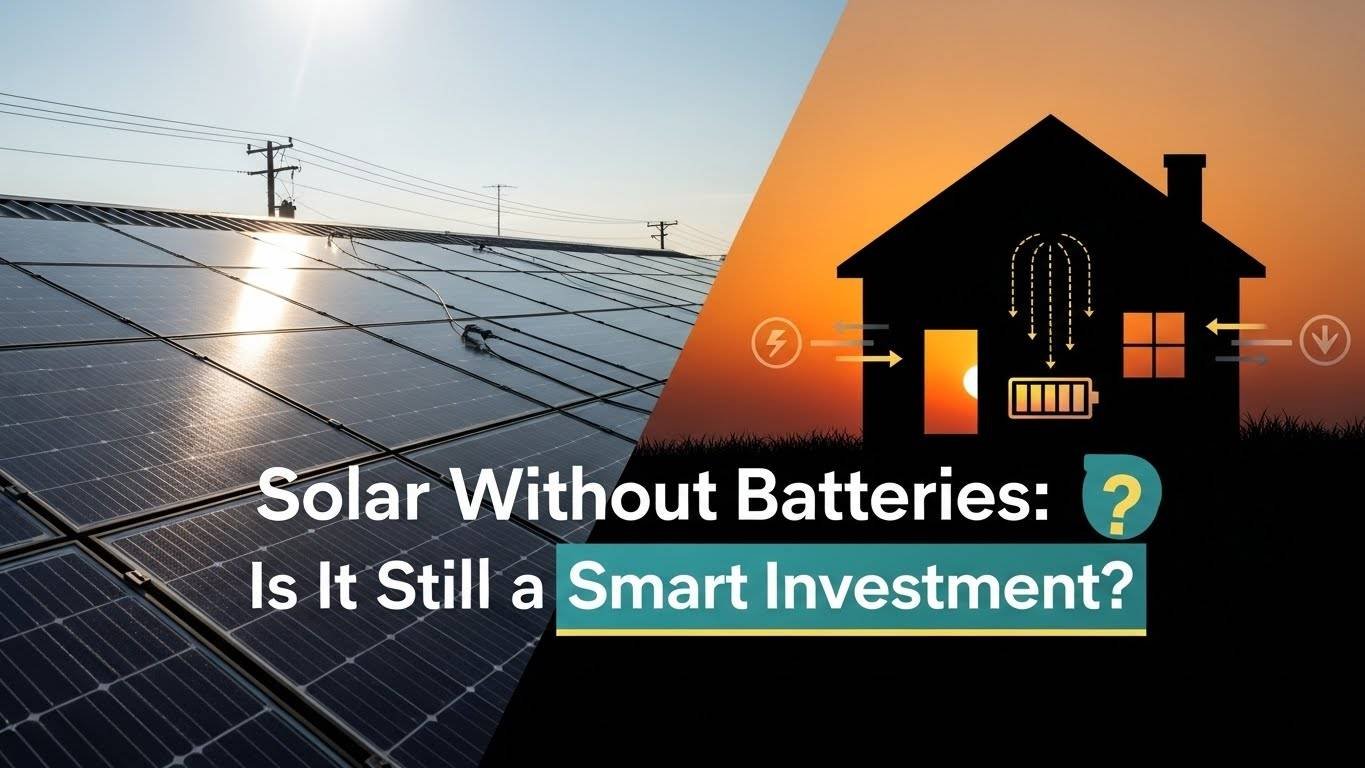
Solar Without Batteries: Is It Still a Smart Investment?
Pakistan’s energy system is changing. With rising electricity bills, frequent power outages, and more people looking at renewable energy, solar power is not just an option anymore ,it’s becoming necessary. Many homeowners and businesses wonder whether they should choose solar systems without batteries? Although systems with batteries are often called the best option, using solar without a battery can also give many advantages. Let’s see if investing in this makes sense for Pakistan’s energy situation.
Understanding Solar Systems Without Batteries
A solar system without batteries , is known as a grid-tied solar system, is directly connected to works side-by-side with your existing electricity connection. In the daytime, your solar panels make electricity for your home or shop. If they produce more than you need, the extra goes to WAPDA and lowers your bill. At night or when the sun is weak, you use normal grid electricity like always.
Different from solar setups with batteries, It doesn’t save energy to use at night. It is very simple to use, and does not need much upkeep, and is so much cheaper to install.
The Cost Factor: Why Many Choose Battery-Free Systems
One of the main reasons people in Pakistan don’t go solar is its cost. Solar panel themselves are not that much expensive , but the batteries significantly raise the price. Good quality solar batteries can cost you anywhere between PKR 100,000 to PKR 300,000 for just a standard household system , depending on the brand and capacity. Furthermore , these batteries require a proper maintenance and replacement after every 5 to 7 years , which adds to the lifetime cost of the system.
Energy Savings: How Much Can You Really Save?
A solar system in Pakistan can cut your electricity bills a lot, even if it doesn’t have a battery. Pakistan gets plenty of sunlight all year, so solar panels work really well. A well-sized grid-tied solar system can meet 60–80% of a home’s electricity needs during the day.
Imagine a normal family living in Lahore consuming about 500 kWh per month . A 5kW grid-tied solar system can roughly generate about 500-600 kWh per month during sunny months .This means the family could see the difference in electricity bills which is now reduced up to 60-70% during the day time. Its more than a year , the family could save several hundred thousand rupees, which means the solar system could be fully paid for in 5–6 years.
Ease of Installation and Maintenance
Solar system without the batteries are way more easier to install. They involve fewer components such as panels, inverters and wiring , compared to a battery-backed system, which include batteries , charge controllers , and additional safety measures. This simple procedure not only reduce installation time but also lowers the chances of technical issues.
Maintenance is another significant advantage. Batteries require careful monitoring of charge cycles and temperature. They can deteriorate quickly in Pakistan’s hot climate if not maintained properly. Battery-free systems, on the other hand, only need occasional cleaning of panels and standard inverter maintenance, making them more hassle-free in the long run.
Maintenance is another significant advantage. Batteries require careful monitoring of charge cycle and temperature. If not taken care of, they can wear out fast in Pakistan’s hot weather. On the other hand
Environmentally Friendly Choice
Batteries , Mostly lead-acid or lithium-ion types, pose environmental challenges. Improper disposal of the old batteries can contaminate the soil and water with dangerous chemicals. Choosing a solar system without batteries reduces this environmental footprint and still giving you clean, green energy.
Limitations: What You Need to Consider
The biggest drawback of a system without batteries is that it can’t provide backup during load shedding. Electricity power outrage happens a lot in Pakistan, especially in small towns and rural areas. Your solar system will stop working without a battery whenever there’s a power outrage.
However, if you live in a city which has a relatively stable electricity supply or you just adjust your energy usage to daylight hours, this downside has little effect. Many families are able to shift their main electricity usage like running washing machines , water pumps , or air conditioning to solar-powered daylight hours , mitigating the downside.
Is It Worth It for Businesses?
Small and medium businesses in Pakistan, can benefit greatly from battery -free solar system. Most of the businesses operate primarily during daytime, coinciding perfectly with solar production. From factories in Faisalabad to offices in Karachi, Grid-tied solar helps lower electricity bills without needing expensive batteries.
The Bottom Line: A Practical Path Forward
Solar systems without batteries are more than just a cost-effective solutions, they are practical and intelligent choice of many Pakistanis . While they don’t provide power during blackouts , the significantly deliver electricity savings, simpler maintenance, and a smaller environmental footprint.
With DSG Energy, adopting solar—battery-free or otherwise—means gaining long-term relief from rising electricity costs, reducing reliance on the grid, and embracing a sustainable energy future with trusted expertise and support.
“You don’t need to store the sun to enjoy its light; you just need to harness it wisely.”
