


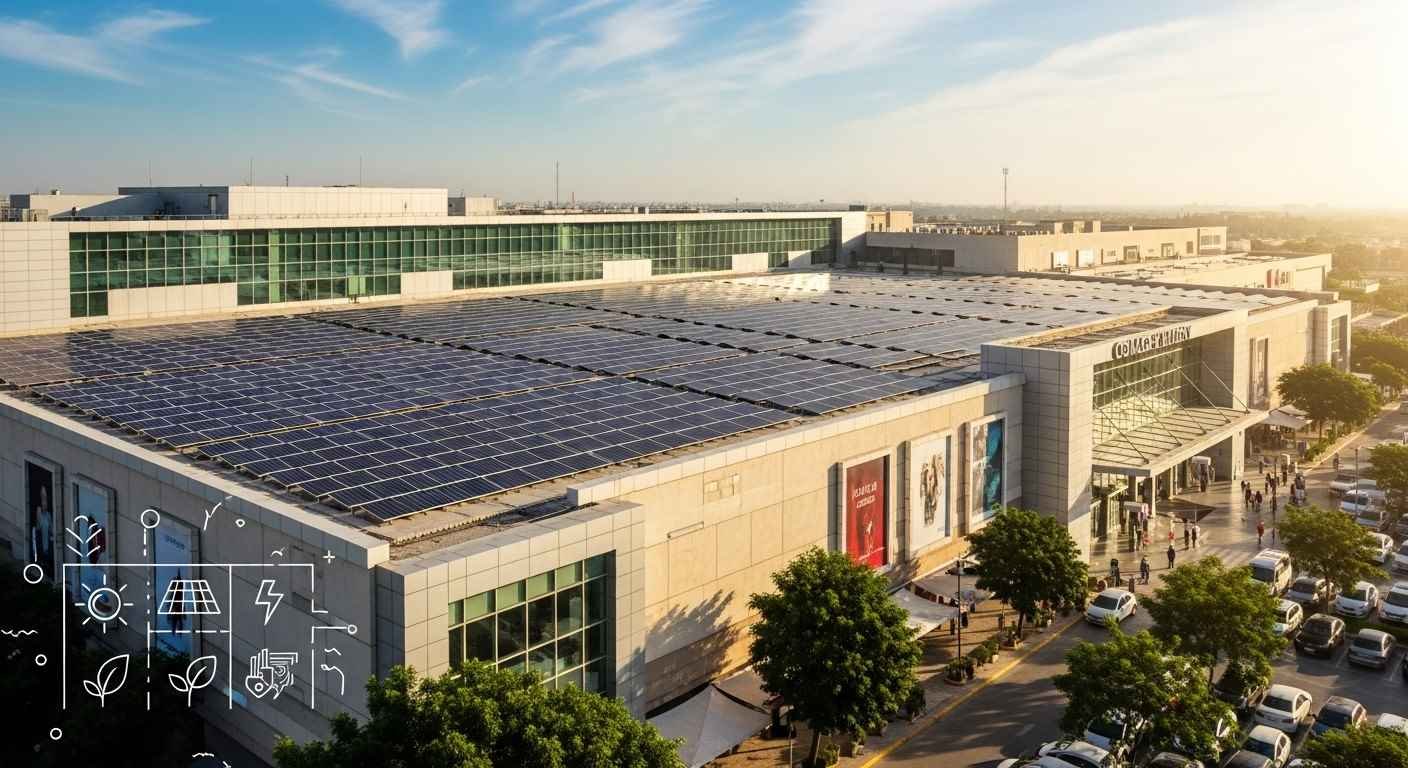
Why shopping malls are switching to Solar in Pakistan
Pakistan’s shopping malls are more than just retail spaces they are energy-intensive hubs operating long hours, hosting thousands of visitors daily, and relying heavily on uninterrupted electricity. From escalators, elevators, and HVAC systems to lighting, food courts, and digital screens, malls consume massive amounts of power every single day.
With rising electricity tariffs, frequent power outages, and growing pressure to operate sustainably, shopping malls across Pakistan are increasingly turning toward solar energy as a reliable and cost-effective solution.
The Rising Energy Challenge for Shopping Malls
Electricity costs in Pakistan have increased significantly over the past few years. For shopping malls, this creates a major financial burden because:
- Malls operate 12–16 hours daily
- Air-conditioning runs continuously
- Lighting is required across large areas
- Backup generators consume expensive fuel
- Grid instability disrupts customer experience
These challenges directly impact operational budgets and profit margins. As a result, mall owners and developers are actively searching for long-term energy solutions and solar power has emerged as the most practical answer.
Why Solar Energy Makes Sense for Shopping Malls
1. High Daytime Consumption Aligns Perfectly with Solar Generation
Shopping malls consume most of their electricity during daylight hours the same time solar panels produce maximum energy. This makes malls ideal candidates for on-grid solar systems, where solar power is used instantly to run operations.
Instead of buying expensive electricity from the grid during peak hours, malls can generate their own power and significantly reduce dependency on utility companies.
2. Massive Reduction in Electricity Bills
One of the biggest reasons malls are switching to solar is cost savings. On-grid solar systems can reduce electricity bills by 40–70%, depending on system size and consumption patterns.
For malls paying millions of rupees monthly in electricity charges, solar power turns energy from a recurring expense into a long-term investment.
3. On-Grid Solar Systems: The Best Fit for Shopping Malls
Most shopping malls opt for on-grid (grid-tied) solar systems because they offer multiple advantages:
Key Benefits of On-Grid Solar for Malls
- No need for expensive batteries
- Lower upfront system cost
- Seamless integration with existing grid supply
- Net metering allows surplus energy export
- Reduced peak-hour electricity charges
With net metering, excess solar energy generated during low-consumption hours is fed back into the grid, earning credits that further reduce electricity bills.
4. Reliable Power for a Better Customer Experience
Power outages and voltage fluctuations negatively affect shopping experiences. Solar systems help stabilize energy supply, reducing reliance on diesel generators and minimizing disruptions.
When paired with backup solutions, solar ensures:
- Smooth mall operations
- Functional elevators and escalators
- Comfortable indoor temperatures
- Continuous retail activity
Happy customers stay longer—and spend more.
Solar Energy Supports Sustainability Goals
Modern consumers prefer businesses that care about the environment. By switching to solar energy, shopping malls:
- Reduce carbon emissions
- Lower fossil fuel dependency
- Promote clean energy adoption
- Strengthen their sustainability image
This not only benefits the environment but also improves brand perception, attracting eco-conscious shoppers and international brands that prioritize green operations.
Government Policies and Net Metering Incentives
Pakistan’s net metering policies have made solar energy more accessible for commercial entities. Shopping malls can now legally connect their solar systems to the national grid and receive credits for excess energy.
These incentives improve return on investment and encourage large commercial spaces to adopt renewable energy without operational risks.
Long-Term Financial Stability
Solar panels typically have a lifespan of 25+ years. After the system payback period—often 3 to 5 years—electricity becomes almost free, apart from minimal maintenance costs.
For shopping malls, this means:
- Predictable energy expenses
- Protection against future tariff hikes
- Improved financial planning
- Higher asset value of the property
Why More Pakistani Malls Are Acting Now
Shopping mall owners are realizing that delaying solar adoption means:
- Paying increasing electricity bills
- Losing competitiveness
- Falling behind sustainability trends
- Higher operating risks
Early adopters, on the other hand, are enjoying reduced costs, improved energy independence, and stronger market positioning.
A Smarter Energy Path Forward
The shift toward solar energy is no longer a trend it is a strategic necessity for shopping malls in Pakistan. Rising energy costs, sustainability demands, and operational efficiency are driving this transformation.
Malls that invest in solar today are building a future that is cost-efficient, environmentally responsible, and resilient against energy uncertainty.
DSG Energy: Powering Pakistan’s Commercial Future
At DSG Energy, we specialize in designing and delivering high-performance on-grid solar solutions for large commercial and retail spaces, including shopping malls. With extensive experience across Pakistan, DSG Energy helps businesses reduce energy costs, optimize performance, and transition smoothly to clean power.
From system design and installation to net metering and long-term support, DSG Energy is committed to empowering Pakistan’s commercial sector with reliable solar solutions.
“When businesses choose clean energy today, they invest not just in savings but in a sustainable tomorrow.”
FAQs
Shopping malls have large rooftop or parking-shade areas and high daytime electricity usage, making solar generation highly effective and cost-efficient.
On-grid solar systems are most suitable as they offer lower costs, net metering benefits, and seamless grid integration.
Most commercial solar projects recover costs within 3 to 5 years, after which electricity savings continue for decades.
