


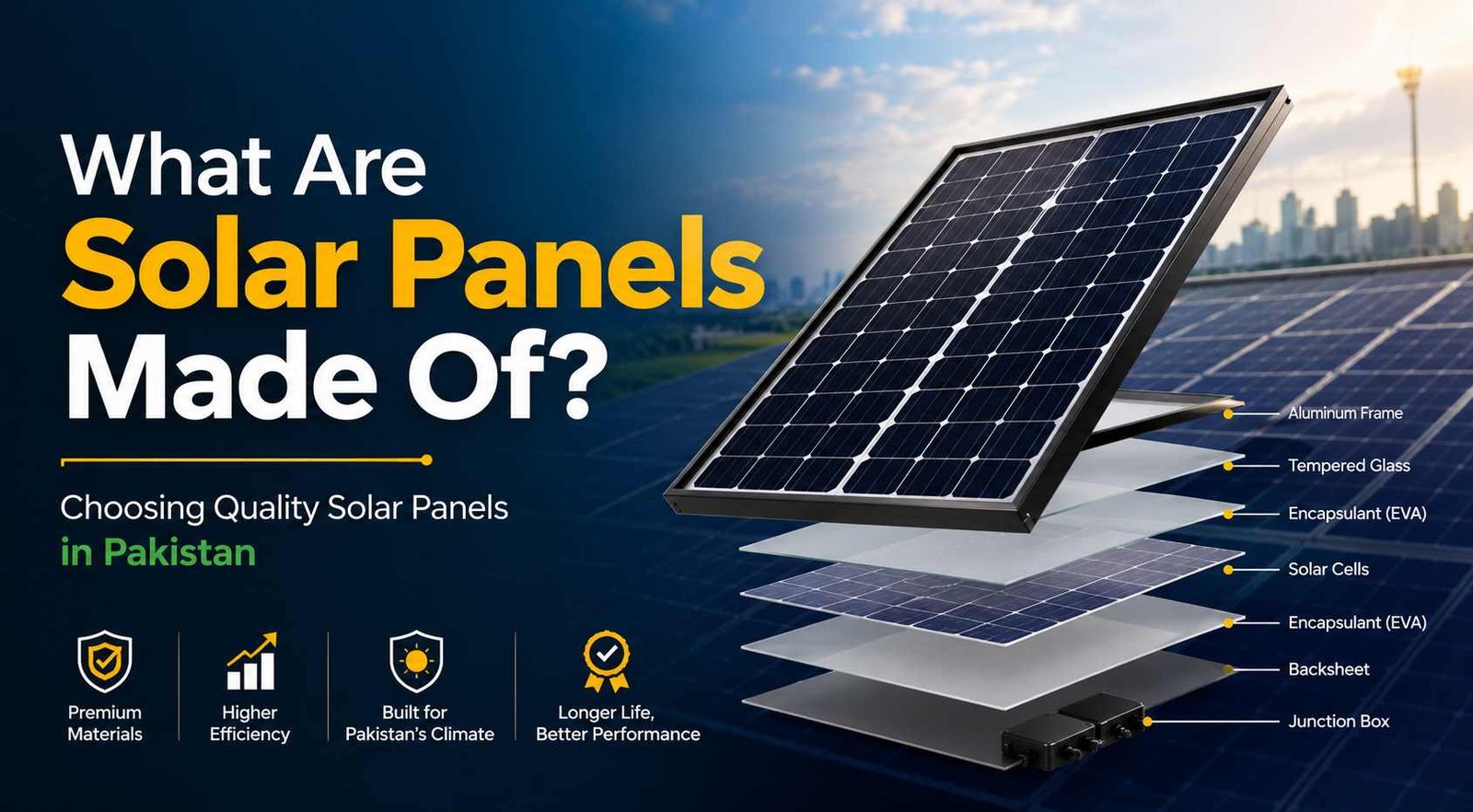
What Are Solar Panels Made Of? Choosing Quality Solar Panels in Pakistan
As solar energy is gaining popularity in Pakistan, many homeowners and businesses are asking an important question before making the investment. What are solar panels actually made of? The material used in solar panels plays a big role in how much electricity they generate over the years. Most people focus on the number of panels or the price of the system, but the material matters just as much.
The quality of these materials directly affects its efficiency , durability , and long-term savings. If you’re planning to install a solar system in Pakistan, understanding what goes into a solar panel can help you make a smarter investment.
The Heart of Every Solar Panel: Silicon Solar Cells
Silicon is one of the most abundant elements on earth, and it just so happens to be excellent at converting sunlight into electricity. Every solar panel is built around a solar cell, and most manufacturers still turn to silicon because it’s efficient, it holds up well over the years, and honestly, nothing else has managed to replace it yet
There are different type of silicon used in the solar panels, but the two most common are:
Monocrystalline Silicon
These panels are made from a single silicon crystal, which is what makes them so efficient and long-lasting. They work well even on small rooftops and keep producing solid electricity even in hot weather which is a big plus for Pakistan’s climate.
Polycrystalline Silicon
These panels are produced using multiple silicon crystals. They are slightly less efficient than monocrystalline panels, while they are generally more affordable. They’re still a solid choice for installations where space isn’t tight. Many premium manufacturers now offer newer technologies like N-Type and HJT panels, which deliver better efficiency, slower degradation, and more energy over the panel’s lifetime.
Tempered Glass: Protecting the Solar Cells
The Top layer every solar panel is made from the specially designed tempered glass. This is not just the ordinary window glass we are talking about .Tempered glass is extremely strong and is build in a way which can withstand harsh environmental conditions, including dust storms, high temperature , heavy rain and strong winds.
EVA Encapsulation: The Invisible Protection Layer
Most of the people have never heard about it but there is a transparent material beneath the glass called EVA (Ethylene Vinyl Acetate), which is one of the most important component inside a solar panel. Its job is to securely bond the glass with the solar cells while protect them from the moisture, dust, vibration, and temperature fluctuations. Low quality EVA can discolor over the period of time, reducing the amount of sunlight reaching the solar cells and ultimately lowering the electricity generations.
The Backsheet: Defending Against Moisture and Heat
There is a rear side of a solar panel which is covered with a durable backsheet. This is a protective layer which acts as an electrical insulator while shielding the internal components from the dust, humidity, UV radiation and environmental damage. The benefit of a strong backsheet is that it increases the lifespan of a solar panel.
Aluminium Frame: Strength and Stability
Every solar panel is fitted with a strong aluminium frame .It reinforces the panel, shields the edges from damage, and gives installers a secure way to mount it on roof or ground-mounted structures. Aluminium is light, doesn’t rust, and holds up for decades outdoors — which is exactly why it’s used so widely in outdoor structures.
Junction Box and Electrical Connections
At the very back of every solar panel is a very small but essential component called the Junction box. It basically collects the electricity generated by the solar cells and then transfers it through the cables to inverters.
If parts of the panel become shaded, there are bypass diodes inside the junction box that help reduces power losses. High-quality wirings, connectors , and the junction boxes ensures reliable operation and improve the overall system safety.
Why Material Quality Matters
Premium materials provide several important advantages:
- Higher energy production
- Better efficiency during hot weather
- Lower annual performance degradation
- Greater reliability over decades
Cheap panels may lead to cracks, reduced efficiency, and early failure because cheap panels often use lower-grade silicon , weaker glass, and inferior encapsulation materials.
Cheaper solar panels may cost less at the beginning, but they often cost more in the long-run through the lower energy generation and higher maintenance requirements.
Choosing Quality Solar Panels in Pakistan
Solar systems has different weather conditions. Solar panels are built to handle tough conditions such as heat, dust, humidity, even the odd storm. When choosing solar panels, consider the following factors:
Efficiency
High-efficiency solar panels produce more electricity from the same amount of roof space. They are a good choice for homes and businesses where there isn’t much room for installation.
Temperature Performance
Choose panels with excellent temperature coefficients to maintain the strong performance even in the extreme heat, Since the temperature regularly exceed 40°C during summer.
Manufacturer Reputation
Choosing the trusted brands provide greater confidence in long-term reliability .Established global manufactures invest in research , testing, and quality control.
Warranty
Usually premium solar panels typically includes product warranties of upto 25 years or more, reflecting the manufactures confidence in their quality.
Certifications
Before purchasing or installing solar , always verify and make sure that the panels meet the international quality and safety standards before making a purchase.
Professional Installation
Installation is the key to best performance , ever the best solar panels cannot perform properly if installed incorrectly .Proper system design, mounting, wiring , and commissioning are equally important for achieving the maximum efficiency.
Why Choose DSG Energy?
At DSG Energy, A solar system performs best when it is built with high-quality components. That’s the reason why we work with globally recognized solar technology partners and then we carefully select premium panels , smart inverters , and high quality mounting structure designed to deliver reliable performance according to Pakistan’s climate.
Choosing quality solar panel is about investing in dependable energy, lower electricity bills, and a more sustainable future- it isn’t simply about buying better equipment.
“The true value of a solar panel isn’t measured by how it looks today, but by how reliably it powers your tomorrow.”
Frequently Asked Questions ( FAQS):
Silicon is the most commonly used material in solar panels because it converts sunlight into electricity efficiently.
Monocrystalline and N-Type solar panels are the best choice for Pakistan because they are more efficient, perform well in hot weather, and last longer.
Yes. Better-quality solar panels are more efficient, last longer, and perform better in different weather conditions.
Quality solar panels usually last 25 to 30 years, and many continue producing electricity even after that.
Premium solar panels may cost more at first, but they produce more electricity, last longer, and help you save more money over time.
