


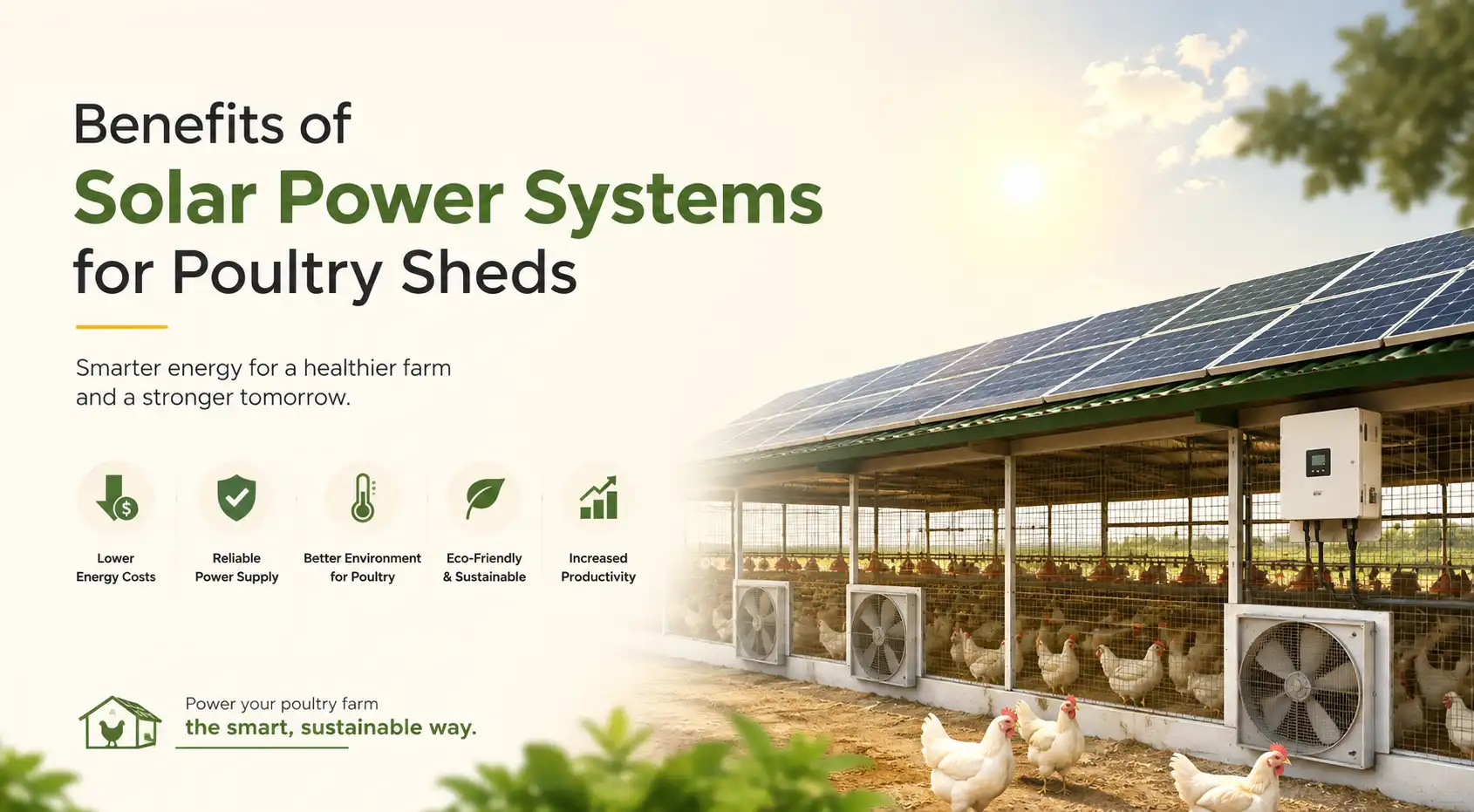
Benefits of Solar Power Systems for Poultry Sheds in Pakistan
Poultry is one of the few sectors in Pakistan that’s grown steadily no matter what else is happening in the economy. But talk to almost any farm owner these days and you’ll hear the same complaint: electricity is eating into profits, and you can’t always count on it being there when you need it.
That’s a real problem in this business. Ventilation fans, cooling pads, feeders, water pumps, lighting — a poultry shed doesn’t really stop needing power, ever. Lose it for even an hour in June or July and you can see the stress in the birds almost immediately. Lose it for longer than that and you’re looking at real losses.
More farm owners have started turning to solar for exactly this reason. It’s not a trend so much as a practical response to a problem that isn’t going away — rising tariffs and a grid that can’t always be relied on.
It Cuts Your Electricity Bill
Power is usually the single biggest line item on a poultry farm’s expense sheet, mostly because these operations run close to 24/7.
Put solar panels on the shed and you’re generating a chunk of your own electricity during the day instead of pulling everything from the grid. Over a few months, that difference shows up clearly on the bill. Some farmers put the savings straight back into the business — more sheds, better stock, upgraded equipment. Others just like having one less unpredictable expense to worry about.
Given where electricity tariffs have been heading in Pakistan, this isn’t really optional anymore for a lot of operations. It’s closer to a hedge.
Fewer Power Cuts Mean Healthier Birds
Birds don’t do well with instability. Temperature swings, stale air, gaps in water access — any of these can knock production off track fast.
The trouble is that grid outages don’t wait for a convenient time. Ventilation and cooling can drop out in seconds, and in hot weather the temperature inside a shed climbs quickly once that happens.
A solar setup with battery backup takes a lot of that risk off the table. Critical equipment keeps running even when the grid doesn’t. Fewer temperature spikes, lower mortality, steadier output — it adds up.
It Keeps the Whole Operation Running Smoother
None of this works unless the environment inside the shed stays consistent. Solar helps keep the essentials going without interruption — fans, cooling pads, exhaust systems, feeders, lighting, brooding equipment. When birds aren’t dealing with heat stress or bad air, they eat better and put on weight more consistently. That consistency is really what drives profitability in this business, more than any single piece of equipment.
Some Protection Against Rising Prices
Trying to forecast electricity costs a year or two out has become genuinely hard for farm owners here. Tariffs keep climbing, and there’s no sign of that slowing down.
Solar doesn’t eliminate the grid entirely, but it reduces how exposed you are to it. And because panels typically hold up for 25 years or more with very little upkeep, the cost predictability you get is one of the more underrated benefits — not just the savings themselves.
Less Reliance on Diesel Generators
A lot of farms still lean on diesel generators to get through load shedding. They work, but they’re not cheap to run — fuel costs add up, maintenance is constant, and the noise and emissions aren’t great either.
Solar cuts into generator use during the day, and if you’ve got batteries in the mix, it can reduce how much you need the generator during outages too. Less diesel burned means lower fuel bills and less wear on the engine over time.
Better Odds Against the Summer Heat
Punjab and Sindh summers are brutal, and that’s exactly where a lot of Pakistan’s commercial poultry farms happen to be. Heat stress is one of the fastest ways to lose production — birds eat less, gain weight more slowly, lay fewer eggs, and get sick more easily when temperatures climb.
Solar is particularly useful here because it produces the most power exactly when you need it most: the hottest hours of the day, when cooling systems are working hardest and grid demand (and outages) tend to spike.
A Cleaner Way to Farm
There’s also a sustainability angle that’s becoming harder to ignore. Solar doesn’t burn anything to produce electricity, so it cuts a farm’s carbon footprint and fits with where Pakistan’s energy policy seems to be heading anyway. For farms that supply larger retailers or export buyers, that can matter for reputation too — it’s increasingly part of what buyers ask about.
It Doesn’t Ask for Much Upkeep
Solar panels have no moving parts, which is a big part of why they’re so low-maintenance. In practice that means cleaning off dust periodically, checking the electrical connections now and then, and keeping an eye on how the system’s performing. That’s about it.
Done right, a system like this can keep running efficiently for decades without much intervention — which makes it a genuinely low-hassle investment compared to most farm equipment.
It Adds Value to the Farm Itself
If you ever plan to sell or bring in investors, a farm with solar already installed tends to look more attractive. Lower running costs, more reliable power, less dependence on the grid — these aren’t small things to a buyer evaluating a poultry operation. It’s one more thing working in your favor when it comes time to negotiate.
Every Farm Is a Bit Different
Not every setup needs the same solution. Some farms are fine with solar covering daytime loads only; others need full battery backup for round-the-clock reliability. A good solar company will actually look at your sheds, your consumption patterns, your available space, and your growth plans before recommending a system size — rather than just selling you a standard package.
Where Government Policy Is Headed
Pakistan’s policy direction has generally favored renewable energy, and awareness of solar as a serious business investment — not just an alternative — keeps growing. For farms that burn through large amounts of electricity year-round, this is turning into a decision that affects the bottom line directly, not a nice-to-have.
Farms that made the switch early are already seeing the benefit in lower costs and less exposure to grid problems.
Why Work With DSG Energy
Picking the right installer matters just as much as picking the right equipment. At DSG Energy, we’ve spent time understanding what poultry operations in Pakistan actually need — and we design systems around that, not around a generic template.
Our team handles everything from initial design through installation and ongoing support, with an eye on what actually holds up in Pakistan’s climate over the long run. Whether you’re running one shed or managing several across a larger operation, we build systems sized to fit your farm, not the other way around.
Frequently Asked Questions
Yes — it’s a genuinely good fit, mainly because it cuts electricity costs while giving you dependable power for ventilation, cooling, and lighting.
In most cases, yes, if it’s sized correctly for your farm’s actual consumption. That’s why proper design matters more than just buying panels.
Yes, as long as the system includes battery storage or another backup solution built in.
Generally over 25 years for good-quality panels, with fairly minimal maintenance needed to keep them performing well.
For most poultry operations, yes. There’s an initial investment, but the ongoing savings on electricity, reduced generator use, and better reliability tend to pay that back over time — often faster than people expect.
