


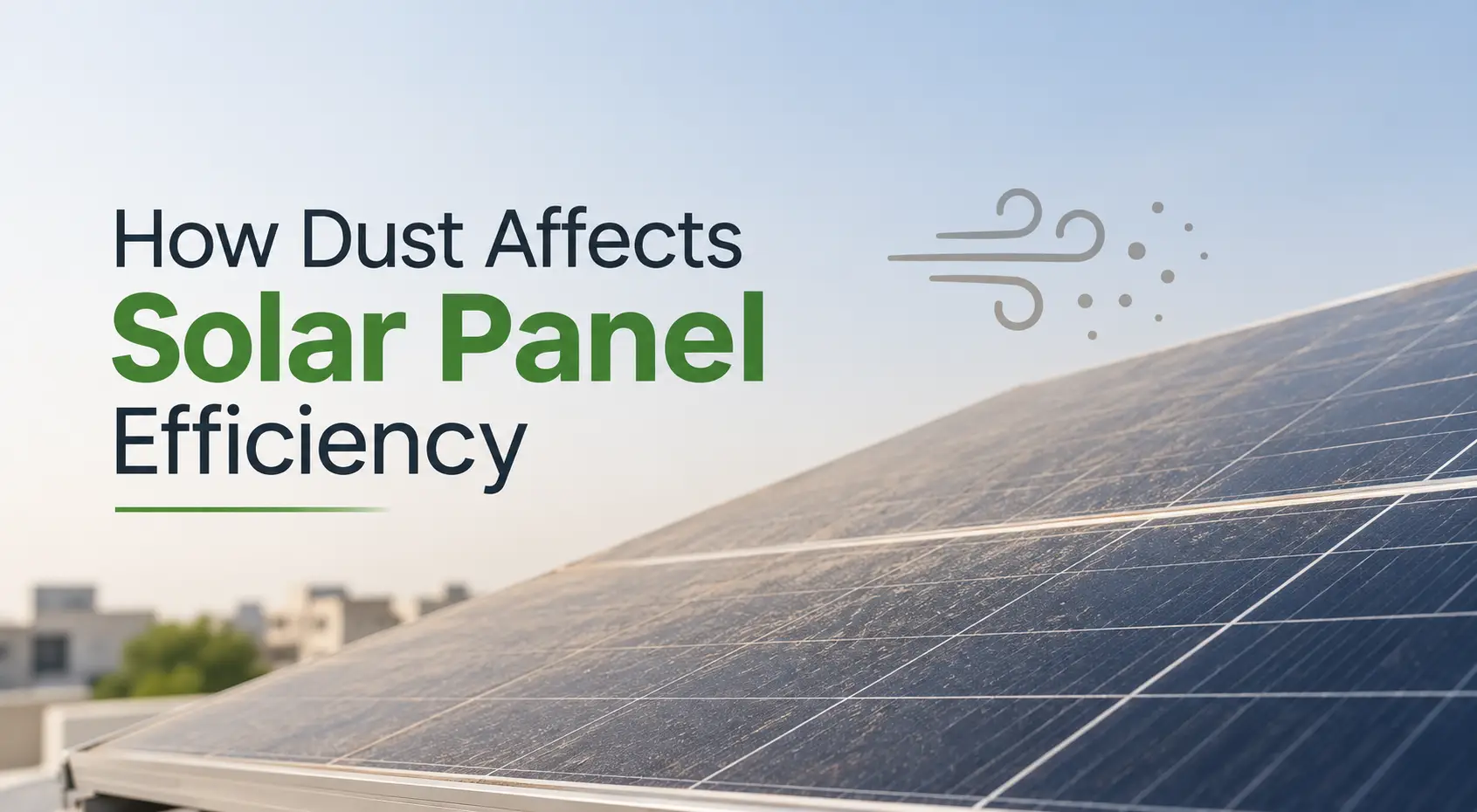
How Dust Affects Solar Panel Efficiency
Most people who put solar on their roof check the app for the first few weeks. Then they stop. The system keeps running, the bill looks better than before, and nobody thinks about the panels again until something goes wrong.
Meanwhile the dust piles up.
I’d say it’s the most ignored problem in solar. It’s slow and quiet, and it never sets off an alarm. Your plant just produces a little less each month, and since nobody remembers exactly what it produced in the first month, nobody notices.
Why Dust Matters At All
Panels aren’t complicated. Light hits the cells, they make DC, the inverter flips it to AC, and your machines run. Now dust the glass over for a couple of months. The cells get less light, so you get less power. The factory doesn’t care, though. It still needs the same units, and whatever your roof doesn’t cover, WAPDA or K-Electric does, at their rate.
What Actually Happens When Panels Get Dirty
You lose output first. It’s rarely dramatic. A light film costs you a little, and a thick crust costs you a lot more. If the panels go months without a wash, you’re paying for power you already had on your own roof.
Then comes the patchiness, which people don’t expect. Dust doesn’t fall evenly. The edge facing the road gets hit hardest. Panels near a construction site get hit hard too. In some layouts the lowest row collects more because dirt washes down and stays there. So you get a plant where some panels are fine and others are struggling, and the total number just looks “a bit low”.
Hotspots need a careful explanation, because people often get it wrong. Normal dust doesn’t cause hotspots. The risk comes from things that stay in one spot for a long time, like dried bird droppings or a shadow that sits across the same cells every day. Those cells work harder than the ones around them and run hotter. Left alone long enough, that can damage the panel.
Pakistan Is A Tough Place For Panels
Lahore, Karachi, Faisalabad, Multan. All of them have traffic, construction, industry, and long stretches with no rain. Coastal cities also get salty air, which makes dust cling harder.
When rain doesn’t come for weeks, the panels don’t get a natural rinse. Dust just keeps landing on dust. If your plant is next to other factories, warehouses, or a busy road, it’s worse again, because the air there carries much more than plain soil.
How Often Should You Clean Them?
Anyone who gives you one fixed number is guessing. A home on a quiet street can get away with less cleaning. A plant beside a highway can’t. Tilt matters too, since flat panels hold dust far longer than steep ones.
I’d say watch the data instead of the calendar. If production drops and the weather hasn’t changed, check the panels. If you can see grime from the ground, or you spot droppings, or one section is clearly behind the rest, that’s your cue.
Cleaning, Without Damaging Anything
Most panel damage I’ve heard about happens during the wash, not before it. Hard water leaves white spots that are a pain to get off, so use clean water. Keep strong chemicals away, since they can eat into the coating. A soft brush or a microfiber cloth is fine, but nothing rough. And don’t do it in the afternoon sun. Cold water on hot glass is how you end up with problems. Early morning is when I’d go.
For a step-by-step guide, read our article on how to clean solar panels to learn the right cleaning methods, tools, and precautions to avoid damaging your panels.
Cleaning Is Just One Piece of O&M
Cleaning is not maintenance. Not on its own. Real O&M means watching your output, checking inverters and cables, and fixing faults while they’re still cheap to fix.
What We Do at DSG Energy
We’ve seen businesses spend a lot on a solar installation and then leave it unattended. Our O&M service at DSG Energy covers monitoring, preventive maintenance, performance optimization, and technical support. The idea is to find problems early, ideally before you’ve lost any generation to them.
DSG Energy: Your Partner in Long-Term Solar Performance.
“Every ray of sunlight matters. Keep your solar panels clean and make the most of the energy they generate.”
FAQs
Yes. It blocks light from reaching the cells, so the panels produce less power.
It depends on where you are. Industrial and dusty zones need cleaning more often than quiet residential areas.
Only partly. Rain takes off loose dust but usually leaves droppings and caked-on dirt behind.
Yes. Lower solar output means you pull more from the grid.
Yes. Clean panels catch more sunlight, and regular visits also help you notice other problems early.
