


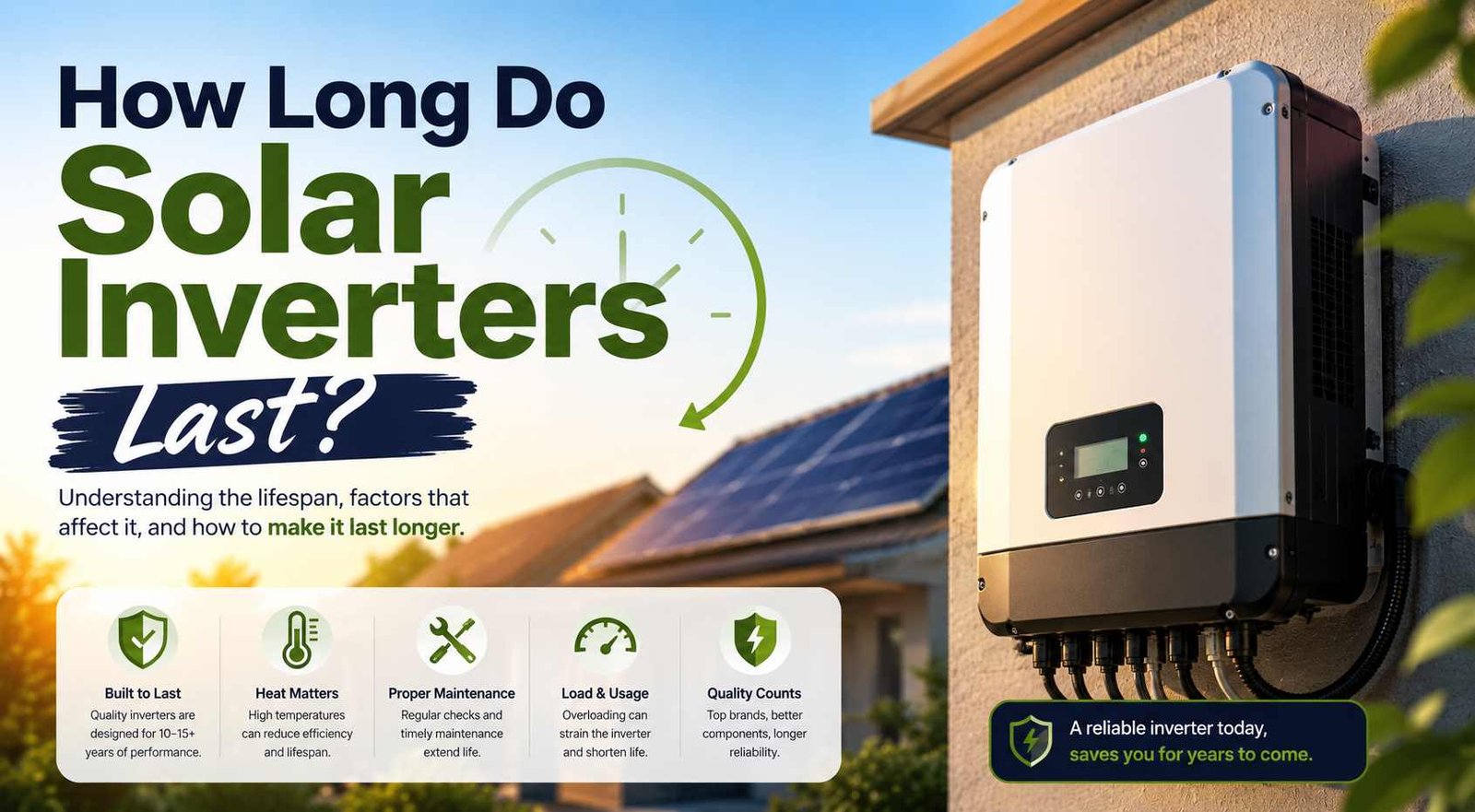
How Long Do Solar Inverters Last?
When anyone is thinking about installing a solar power system, most of the attention goes to the solar panels. One of the most important part of any solar system is the solar inverters. Without it , the electricity is generated by your solar panels cannot be used to power your home or business.
A common question many homeowners and business owners ask is, “How long does a solar inverter lasts?” It really depends on a few things — the type of inverter you have, how good the build quality is, whether it was installed properly, and how well you keep up with maintenance.
What Does a Solar Inverter Do?
Solar panels produce DC electricity, but here’s the thing — our homes, offices, and factories all run on AC power. So there’s a mismatch that needs sorting out. That’s where the solar inverter comes in , it takes the DC power and converts it into AC, so you can actually use that energy safely in your home.
Modern inverters also perform several important functions, such as:
- Monitoring system performance
- Detecting faults and safety issues
- Optimizing energy production
- Communicating with monitoring apps and software
So, How Long Does a Solar Inverter Last?
On the average , the high quality solar inverters last between the 10-15 years. Premium models can often continue for working for 15-20 years with the proper maintenance and favorable operating conditions.
| Inverter Type | Average Lifespan |
| String Inverter | 10–15 years |
| Hybrid Inverter | 10–15 years |
| Microinverter | 20–25 years |
| Power Optimizer (with inverter) | 20–25 years |
What Affects the Lifespan of a Solar Inverter?
Not every solar inverter lasts the same number of years. How long it keeps working depends on where it’s installed, how it’s used, and how well it’s maintained.
- Product Quality
As we know that all the solar inverters are not built on the same standard. Reputable manufactures uses advanced cooling systems, higher quality electronic components and better protection against the electrical faults. A premium inverter may cost slightly more initially, but it often delivers the greater reliability and lower maintenance costs over the period of time.
- Installation Quality
Even the best inverter can develop problems if it is installed incorrectly.
Proper installation ensures:
- Good ventilation
- Secure electrical connections
- Correct wiring
- Safe operating temperatures
Professional installation reduces unnecessary stress on the inverter and helps extend its working life.
- Climate Conditions
Pakistan usually experiences extremely hot summers in many regions. High temperatures can affect the electronic components over the time.
The way the inverter is installed also has a big impact on how long it lasts. A shaded, well-ventilated spot can help it last longer than the location that gets the direct sunlight or too much heat. Weather conditions can also affect an inverter over the period of time. Dust, humidity, and heavy rain may reduce its performance if it isn’t properly protected.
- Daily Usage
The amount of the electricity flowing through the inverter everyday also affects its lifespan. Commercial and industrial facilities usually place the greater demands on their solar system than the residential users. Heavy daily operations can gradually increase to wear on internal components.
- Regular Maintenance
Although the solar inverters require very little maintenance , occasional inspections help to identify the minor issues before they become expensive repairs.
- Cleaning dust from ventilation areas
- Checking electrical connections
- Reviewing performance data
- Updating inverter software when available
Signs Your Solar Inverter May Need Replacement
Like any electrical equipment, solar inverters usually show warning signs before they fail completely.
Some common indicators include:
- Frequent system shutdowns
- Error messages on the display
- Lower electricity production than expected
- Unusual noises from the inverter
- Overheating warnings
- Difficulty connecting to the monitoring platform
If you see any of these signs, it is best that you should have your system inspected by the experienced solar professionals rather than waiting for a complete breakdown.
Can a Solar Inverter Last Longer?
Yes, the solar inverter last longer. While every inverter has a natural lifespan, good operating practices that can help maximize it performance.
Here are a few simple ways to extend inverter life:
- Install it in a cool, shaded location.
- Ensure proper airflow around the unit.
- Schedule periodic inspections.
- Keep the surrounding area clean and dust-free.
- Monitor system performance regularly.
Why Choosing the Right Inverter Matters
When buying a solar system, most people only look at the solar panels. But the inverter is just as important because it helps determine how much electricity your system produces.
A reliable inverter helps:
- Maximize energy production
- Reduce unexpected downtime
- Improve system safety
- Lower maintenance costs
- Provide accurate energy monitoring
- Deliver consistent performance throughout the year
Choosing the Right Solar Partner Makes the Difference
A solar inverter is designed in a way that can serve your system for many years, but its lifespan depends just as much on the proper design, installation, and the ongoing support as it does on the product itself. Working with an experienced solar company ensures that every part of the system from the panel selection to inverter placement which is planned for maximum performance and long-term reliability. Quality equipment, skilled installation, and dependable after-sales service all that contribute to a system that continues delivering the clean energy year after year.
At DSG Energy, we focus on providing the complete solar solutions using the trusted technology, professional engineering, and continuous technical support. Whether you are installing a residential, commercial, or industrial solar system, choosing the right partner helps protect your investment and make sure that your system performs efficiently for years to come.
“A reliable solar inverter doesn’t just convert energy—it protects your investment and keeps your solar journey running strong for years to come.”
Frequently Asked Questions
Most solar inverters need replacement after 10 to 15 years. Premium models may last closer to 20 years if they are properly maintained.
Yes. Minor faults such as damaged fans, fuses, or communication issues can often be repaired. However, major internal failures may require a full replacement.
Yes, but very little. Periodic inspections, cleaning, and performance monitoring are usually enough to keep the inverter operating efficiently.
High temperatures can shorten the lifespan of electronic components over time. Installing the inverter in a shaded, well-ventilated area helps minimize heat-related stress.
Solar panels generally last 25 to 30 years or more, while most solar inverters have an average lifespan of 10 to 15 years, making one inverter replacement during the system’s lifetime quite common.
