


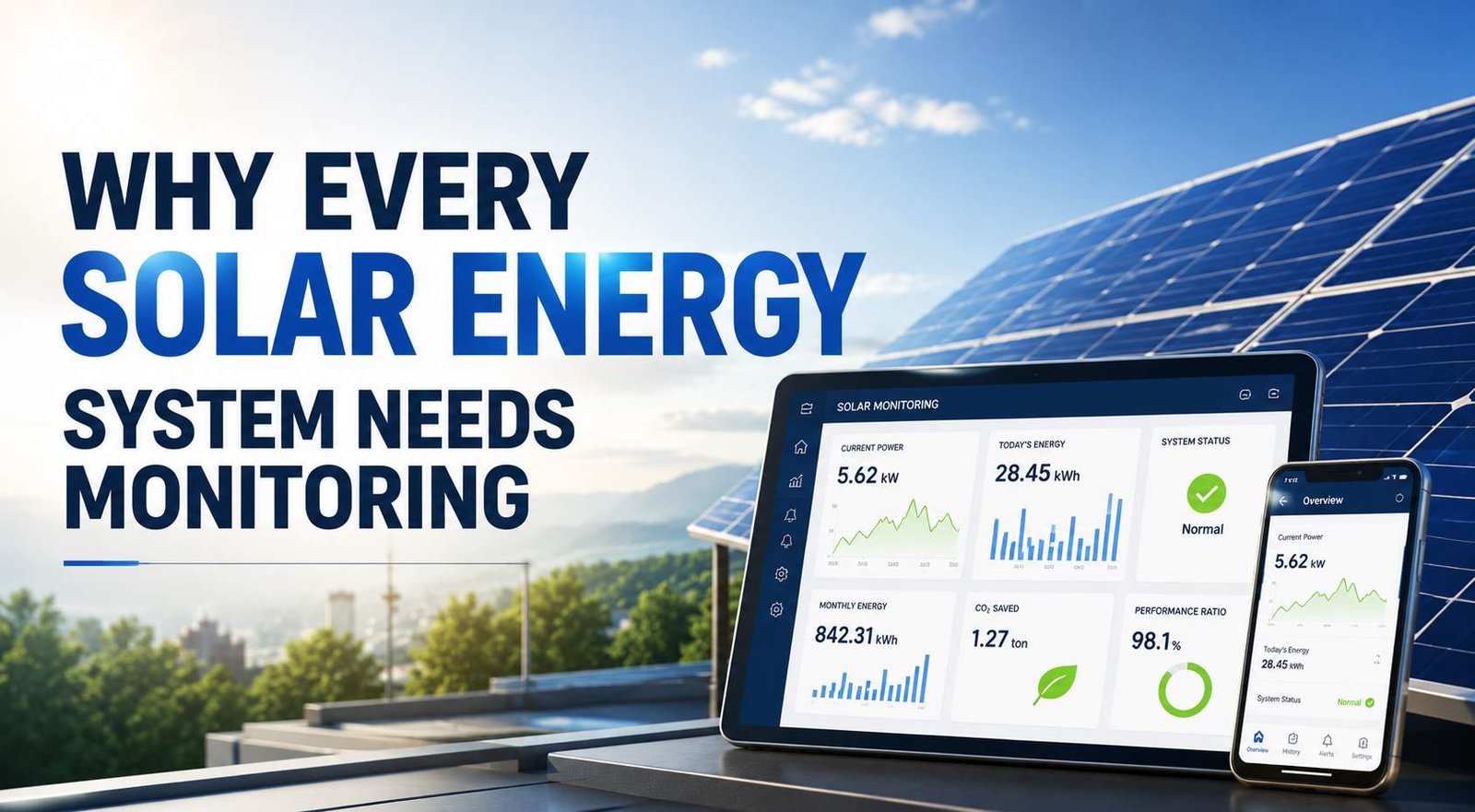
Why Every Solar Energy System Needs Monitoring
Installing a solar energy is a very smart investment. Whether it is for home, factory, hospital , commercial building, or agriculture facility, Solar power helps reduces the cost of electricity, decreases the reliance on the grid, and supports a cleaner future. However, many people also assume that once the solar panels are installed, the job is done which is not true.
In reality, a solar energy system performs best when it is continuously monitored.
Think of solar monitoring as the health check-up of your solar system, Just as you would monitor the performance of the vehicles or the machine to ensure everything is running efficiently, a solar energy system also needs a regular tracking system and analysis to deliver the maximum results.
Without the monitoring, a system could be underperforming for weeks or even months without the owner realizing it. This can lead to lower energy production, financial losses , and missed opportunities for the savings.
What Is Solar Monitoring?
Solar monitoring is the process of tracking the performance of a solar power system in real time. Through the monitoring software and smart devices , system owners can also view important data such as:
- Daily, monthly, and yearly energy generation
- Current system performance
- Power consumption patterns
- System efficiency
- Faults or technical issues
- Environmental impact and carbon savings
Most modern monitoring platforms can be accessed through a mobile app or web portal , allowed users to check their solar system anytime and from anywhere.
Detect Problems Before They Become Expensive
One of the biggest advantages of solar monitoring is early fault detection.
A solar system may continues operating even when a component is not functioning properly.
A damaged panel , inverter issues, loose connection, or the wiring fault may not be completely shutdown the system but can significantly reduces the energy production.
Without monitoring , these issues often go unnoticed until the bill of electricity starts increasing.
Monitoring systems immediately alert owners and the services teams when the performance drop to below expected levels. This allows the problem to be identified and resolved before they are resulted in major losses.
Maximize Your Return on Investment
A solar energy system is designed in such a way so that it can save money over many years. To achieve the highest possible returns on the investment, the system must perform consistently perform as its expected capacity.
Imagine that you are investing in a solar power plant and expects it to generate 100 units of daily energy , If a fault cause production to drop to the 80 units and then nobody notices for several months , the financial impact can be substantial.
Monitoring ensures that the every panel , inverter , and component is contributing as intended. By identifying the performances the issue quickly , system owners can maximize the energy generation and recover their investment fast.
Understand Your Energy Consumption
Monitoring is not only about the solar production: it also helps the users to understand how they can consume the electricity.
By analyzing the consumption patterns, businesses and the homeowners can identify the peak usage period and make informed the decision about the energy management.
For example, a factory may discover that the certain equipment consumes the excessive electricity during the specific hours. A commercial facility may identify the opportunities to
These insights can lead to the additional cost savings beyond the benefits of solar power itself.
Improve System Efficiency
Environmental conditions, dust accumulation, shading , and equipment wear can affect solar system performance.
Pakistan’s climate presents the unique challenges for solar installations. Dust and pollution can significantly reduces the panel efficiency if cleaning and maintenance are neglected.
A monitoring system helps to compare actual performance against expected production levels . If generation drops the unexpectedly , ut may indicates that the panel require cleaning or maintenance.
Regular monitoring helps to ensures the system operates at the peak efficiency throughout the year.
Real-Time Access and Peace of Mind
One of the most appreciated features of the modern solar monitoring is the convenience
Instead of wondering whether the system is working properly , users can simple open an app and then they can view real-time performance data.
Whether you are at home, at work, or traveling, you can instantly check:
- How much energy is being generated
- How much electricity is being consumed
- Whether the system is operating normally
- Estimated savings achieved
This transparency gives users confidence that their investment is delivering results every day.
Essential for Commercial and Industrial Projects
For businesses , solar monitoring is even more than critical
Commercial and industrial facilities often rely on the large-scale installations to offset a significant portion of their electricity costs. Even the small performance losses can translate into the substantia; financial impacts.
Monitoring allows the facility managers to track the performance across multiple sites , evaluate system efficiency , and generate the detailed reports for the management and the stakeholders.
In industries where uninterrupted operations are the essential, monitoring also helps to maintain the energy reliability and operational continuity.
Supports Better Maintenance Planning
Traditional maintenance often follows fixed schedules. While routine inspections remain important , monitoring allow maintenance to become more proactive.
Instead of waiting for a scheduled inspection, service team can respond to the specific alerts and the performance anomalies as they occur.
This approach reduces the downtime, lowers the maintenance costs , and help extent the lifespan of the solar equipment.
In many cases, monitoring the data can even predict potential failures before they happen, allowing preventive action to be taken.
Helps Verify Net Metering Benefits
For customers using the net metering, monitoring provides valuable visibility into the electricity exports and imports
Users can now track that how much solar energy is being sent to the grid and them compare it with the utility records. This helps to ensure that the net metering benefits are accurately reflected and that the system is generating the expected the financial returns.
Having the access to this information also helps the users for the better understanding seasonal production trends and the future energy planning.
Data-Driven Decision Making
Modern businesses increasingly rely on the data to improve the performance and efficiency . Solar energy should be no different.
Monitoring transforms a solar system from a passive asset into measurable and manageable energy resources.
With accurate performance data, users can:
- Evaluate energy-saving targets
- Plan future expansions
- Assess system upgrades
- Improve operational efficiency
- Make informed energy decisions
The more information available, the easier it becomes to optimize energy usage and reduce costs.
Why Choose DSG Energy?
At DSG energy, we believe that the installing solar panels is the only the beginning of the journey. A truly effective solar solution combines the high quality equipment with the intelligent monitoring and professional support.
Our solar projects are designed with the performance, reliability and long-term value in mind. Through advanced monitoring solutions, our clients gain complete visibility into their system’s performance , ensuring they get the maximum benefits from their investment.
From residential installations to large-scale commercial and industrial projects, DSG Energy provides expert guidance, dependable after-sales support , and the ongoing performance monitoring to help customers achieve sustainable energy success.
“You can’t improve what you don’t measure—and in solar energy, monitoring is the key to maximizing every ray of sunlight.”
Frequently Asked Questions
Solar monitoring is a system that tracks the performance and energy generation of a solar power plant in real time through a mobile app or web platform.
Monitoring helps detect faults, improve efficiency, maximize energy production, and ensure the system delivers expected savings.
Yes. Most modern solar monitoring systems provide mobile applications that allow users to track performance anytime and anywhere.
Indirectly, yes. By identifying performance issues quickly, monitoring ensures the system generates maximum energy and achieves optimal savings.
Ideally, system performance should be monitored continuously through automated software, with periodic reviews of performance reports.
Yes. Monitoring systems can detect unusual performance drops, helping identify cleaning requirements, equipment issues, or maintenance needs before they become major problems.
